Moffitts Antiques
Antique 19th Century British Lilac Moulded Edge Plate 23cm
Antique 19th Century British Lilac Moulded Edge Plate 23cm
Couldn't load pickup availability
This listing is for an attractive 19th‑century British ceramic plate in a soft lilac tinted glaze, measuring approximately 23 cm in diameter. The plate has a gently scalloped outline with moulded rococo‑style scrolls and shell motifs running around the rim, typical of mid‑Victorian taste. The raised ornament is highlighted by a slightly deeper pooling of glaze which helps to accentuate the relief when the piece is displayed under light.
The body appears to be an earthenware typical of British production in the mid to late 1800s, covered with a pale lilac or bluish‑lilac lead glaze. There is no factory mark visible on the underside, which is common for many utilitarian wares of the period and makes precise attribution difficult; however, the combination of scalloped form, moulded cartouches and the general potting style strongly suggests production from one of the Staffordshire or North‑English potteries active in the mid‑19th century. The colour would have been considered fashionable in the Victorian era, harmonising with transfer‑printed services and other pastel‑glazed tablewares.
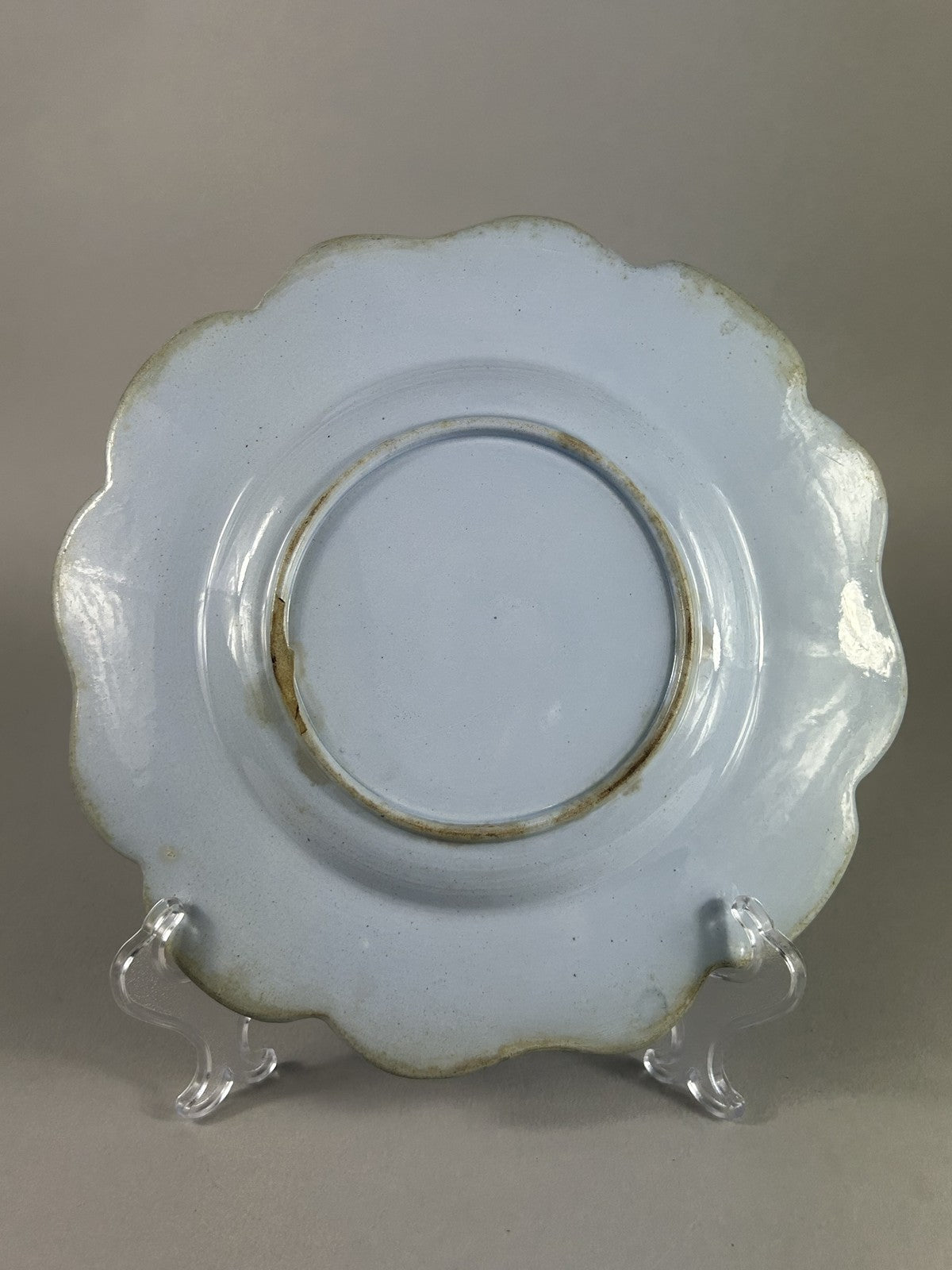
The plate’s decorative interest lies primarily in its profile and outlined rim. When viewed from the side, the well is gently dished and framed by a pronounced cavetto that draws the eye outward towards the elaborate edge. The underside shows a neatly turned foot ring and a broad, smooth base, again in keeping with mass‑produced yet well‑finished pottery of the time. This makes the plate suitable both for wall display and for use on a flat surface in a cabinet or dresser arrangement.
Condition is best described as mid / fair antique, and collectors should carefully review the detailed photographs. The front face shows overall utensil wear and a network of fine scratches consistent with extended table use in the 19th and early 20th centuries. There are scattered small glaze imperfections, minor pits and firing specks typical of the manufacturing methods of the era. Light surface staining and discolouration are evident, particularly within the well where liquids have gently absorbed into the crazed glaze over time. Around the rim there is some rubbing and darker age toning on the high points of the moulding, which, while evidencing use, also brings out the richness of the applied relief.
The back of the plate shows further signs of age, including a ring of wear on the foot where the unglazed or thinly glazed edge has come into repeated contact with surfaces. There are areas of brownish glaze staining and kiln residue, mostly concentrated around the foot ring and perimeter; these are stable and form part of the piece’s patina. No obvious structural cracks or significant chips are apparent in the images, although tiny frits or nibbling at the very tips of the scallops may be present on close inspection, as is common with this undulating form. The glaze remains largely intact and retains a soft, slightly satiny gloss despite its years of service.
This plate would make a characterful addition to a collection of 19th‑century British ceramics, particularly for those interested in plain‑glazed shapes, lilac or pastel wares, or unmarked Staffordshire pieces. Its relatively generous 23 cm diameter allows it to work well as a single accent on a wall, as part of a graduated stack on a dresser, or as a period prop for historical interiors and film or theatre settings. While not in pristine condition, the evident wear is honest and compatible with its age, giving the piece an authentic country‑house charm.
Because condition is important to many collectors, this plate is recommended primarily for decorative use rather than food service, unless the buyer is comfortable with the inherent imperfections of 19th‑century glazed earthenware. Overall, it offers an appealing combination of shapely Victorian design, subtle lilac coloration and time‑worn surface character that will resonate with enthusiasts of antique British pottery.