Moffitts Antiques
Antique 19th Century British Lilac Moulded Rim Plate 23cm
Antique 19th Century British Lilac Moulded Rim Plate 23cm
Couldn't load pickup availability
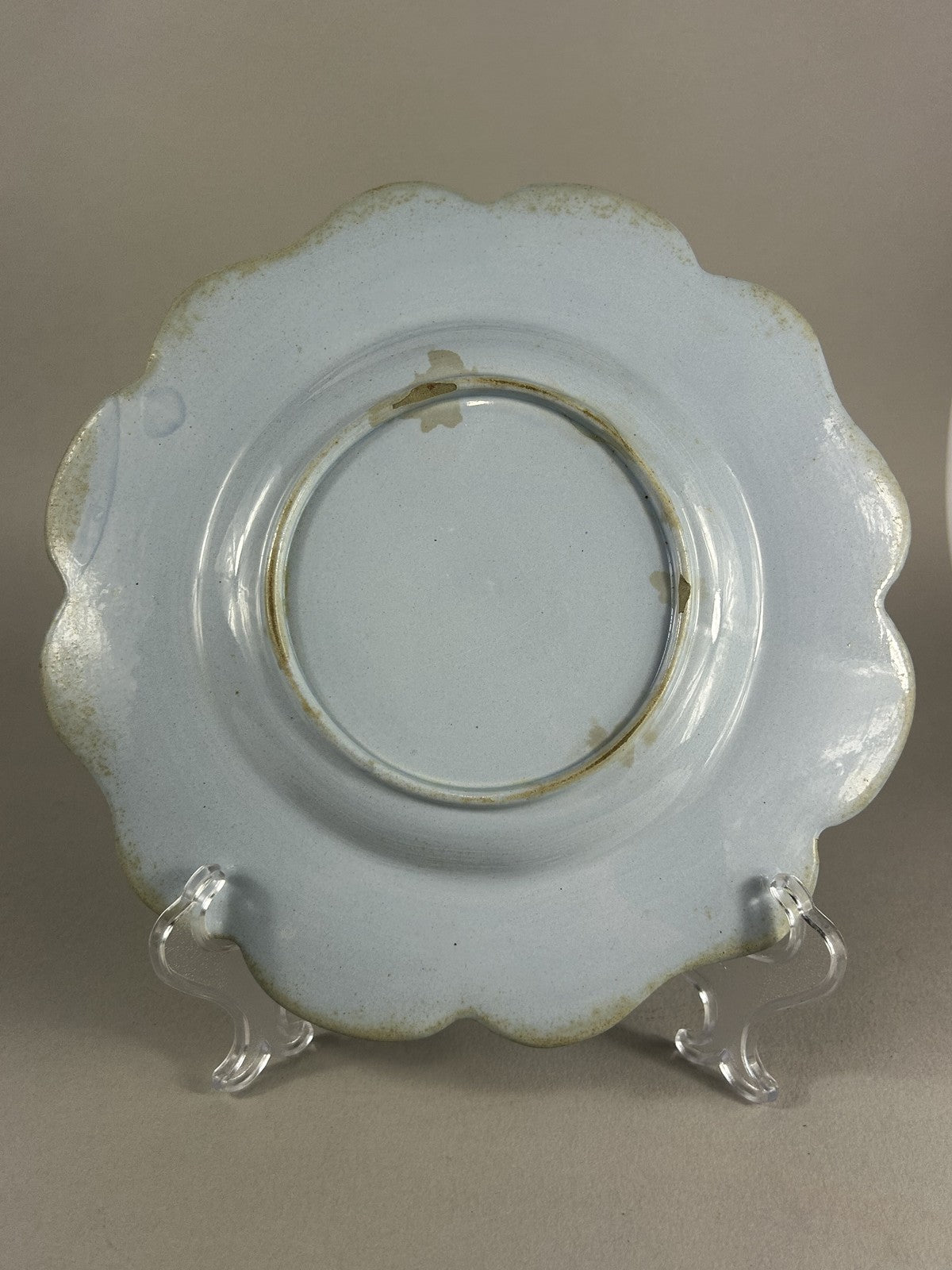
This attractive 19th century British plate is a good example of everyday Victorian tableware with an elegant, moulded rococo-inspired rim. Measuring approximately 23 cm in diameter, it presents a gently lobed outline with eight shallow scallops and raised scrollwork at the edge, creating a refined, decorative silhouette typical of mid–late 1800s production. The plate is made from a fine white ceramic body with a soft lilac‑tinted glaze, giving a delicate, cool hue that reads as very pale purple in natural light rather than a strong colour wash.
The rim is embellished with relief moulding in the form of asymmetric scrolls and shell‑like flourishes, lightly picked out by age‑toned glaze and surface wear. This sort of patterning was popular among British potteries in Staffordshire and other manufacturing centres between roughly 1840 and 1880, reflecting the lingering influence of Rococo Revival design. The underside (not shown with a printed mark here) would typically have been left plainer, sometimes bearing an impressed or printed factory mark; however, many utilitarian wares of this era were either unmarked or only faintly impressed, so collectors often identify them by body, glaze and profile rather than by maker alone.
The lilac or very pale purple ground is characteristic of certain mid‑19th century “flow” or tinted glazes used to soften the starkness of a white body and coordinate with coloured transfer patterns on companion pieces. On this example, the plate appears to have been produced as a solid colour piece, allowing the moulded rim to carry the visual interest. The central well remains plain, designed for serving food while framing the contents with the ornamental border.
Condition overall can be described as mid or fair, consistent with more than a century of domestic use. The glaze surface shows scattered utensil marks and minor abrasion in the centre from cutlery. Around the outer rim there is visible discolouration and localized staining in several sections, most notably a darker area of glaze wear or old surface chip near the upper edge, as evident in the photographs. There may be tiny frits or pinpoint nicks along the moulded scrolls, which are common on pieces with such raised decoration. No major structural cracks or obvious restoration are apparent from the images, though slight firing irregularities and age‑related crazing may be present on close inspection, typical of 19th‑century earthenware.
For collectors, this plate will appeal as a decorative accent in a period interior, particularly when grouped with other lilac, lavender, or pastel‑glazed wares. It works well displayed on a plate stand, as shown, where the scalloped outline and shell‑scroll border can be fully appreciated. It could also be incorporated into an eclectic table setting, bearing in mind that the historic glaze and surface wear make it better suited to light, occasional use or purely decorative purposes rather than everyday modern dishwashing.
In summary, this is a charming 19th century British lilac‑glazed plate with an ornate moulded rim and a diameter of about 23 cm. Its gentle colour, period form and timeworn patina give it character and authenticity, making it a pleasing addition to a collection of Victorian ceramics or to a display of softly coloured antique tableware.