Moffitts Antiques
Antique French Ormolu Mounted Chinese Porcelain Centerpiece Dish
Antique French Ormolu Mounted Chinese Porcelain Centerpiece Dish
Couldn't load pickup availability
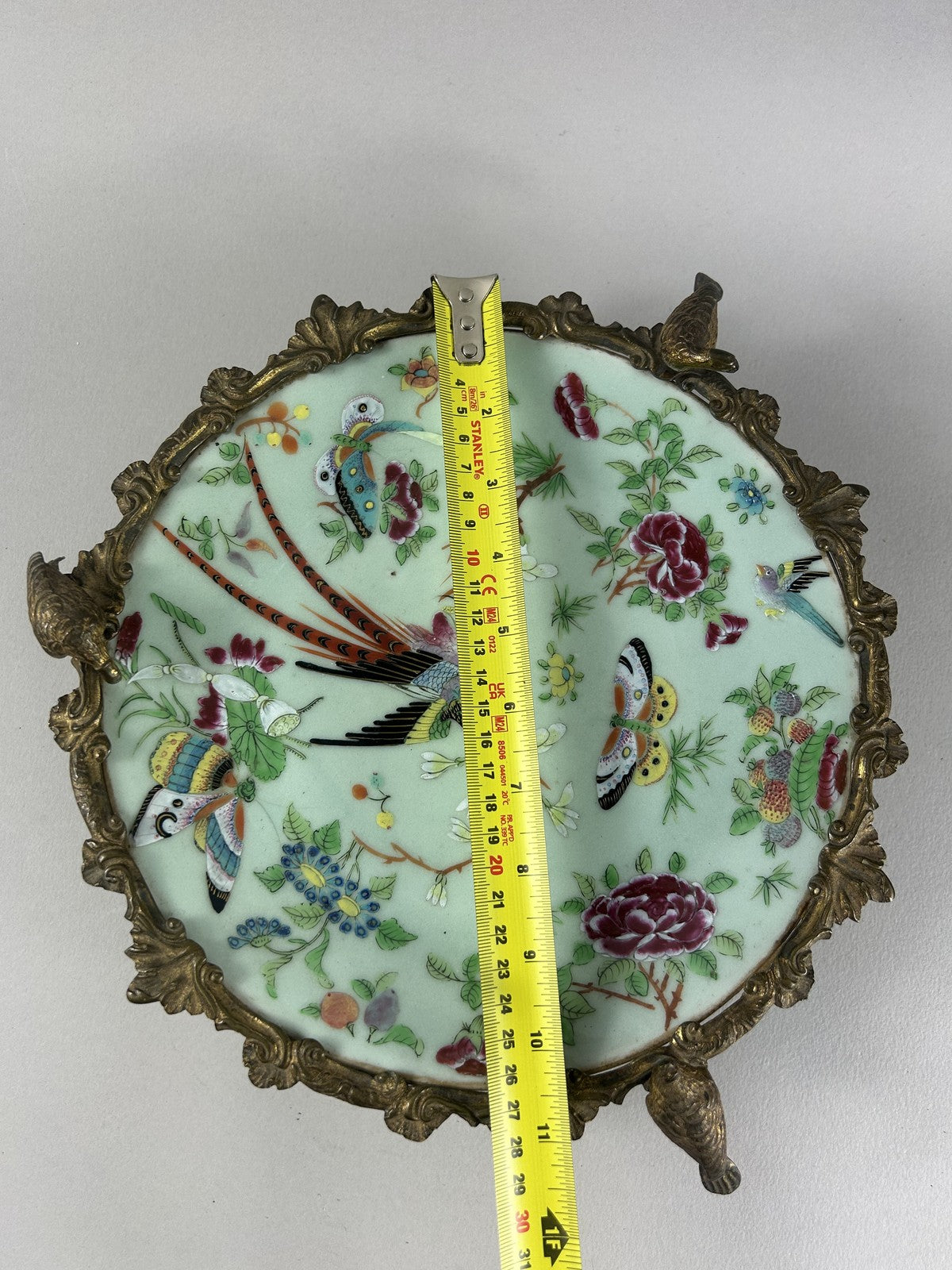
This attractive centerpiece is an antique French ormolu-mounted Chinese porcelain dish, combining refined Qing-style decoration with the opulent metalwork typical of late 19th‑century French craftsmanship. Measuring approximately 28 cm in diameter, it is an ideal size for use as a low table centerpiece, fruit dish, or purely decorative accent.
The porcelain plate itself is Chinese, almost certainly export ware produced for the European market. It has a soft celadon‑green ground and is richly enamelled with a lively scene of birds, butterflies, flowering shrubs and fruiting branches. A long‑tailed pheasant occupies the centre, its finely detailed plumage picked out in polychrome enamels of red, yellow, turquoise, black and white. Surrounding sprays of peony, prunus blossom, berries and foliage are executed in the famille‑rose palette, with delicate shading and careful line work that testify to a skilled hand. Brightly coloured butterflies, painted with jewelled spots and banding, add an additional note of movement and asymmetry characteristic of 19th‑century Chinese decorative taste.
The underside of the plate bears a blue underglaze seal‑type mark within a double circle. The mark is characteristic of 19th‑century apocryphal reign marks used on export porcelain; it is not intended as a literal indication of the imperial workshop but rather as a mark of auspicious association. The potting is relatively thin yet strong, with a well‑finished footrim, again in line with quality export production of the later Qing period.
The porcelain has been mounted in France in finely cast and chased gilt bronze (ormolu), a practice popular with Parisian marchands‑merciers and bronziers from the 18th century onward and continuing into the Belle Époque. A scrolling rococo‑inspired rim embraces the edge of the plate, with foliage and shell motifs providing a decorative frame. Three naturalistic bird figures, probably pheasants to echo the central painting, are applied around the rim; they serve visually as handles and are also integrated into the structural bracing of the mount. The dish stands on three ornate foliate feet, giving it a shallow tazza or low‑compote profile and elevating the porcelain just enough to emphasise it as a centerpiece on a dining or occasional table.
The gilt bronze retains an attractive, slightly muted patina consistent with age and use. The user notes correctly that the ormolu would respond well to a gentle clean should a brighter, more golden finish be desired, but many collectors prefer to preserve the existing surface as part of the piece’s antique character. One of the applied bird figures is reported to be slightly loose; this appears to be a minor issue at the join and does not detract from stability or display. The porcelain plate itself presents in good condition overall, with no obvious chips or restoration visible in the photographs, only the expected light wear to the enamels from handling.
This fusion of Chinese porcelain and French gilt‑bronze mountings exemplifies the enduring appeal of “chinoiserie” in European interiors. Such pieces were highly fashionable in France in the second half of the 19th century, when collectors and decorators sought exotic but refined objects to enrich salons and dining rooms. Today the centerpiece remains both decorative and functional: it can be used for serving wrapped sweets, presenting fruit, holding potpourri, or simply enjoyed as a sculptural object. Its combination of colourful hand‑painted Chinese imagery and sculptural French ormolu birds makes it particularly eye‑catching from every angle.
For buyers, this centerpiece offers an authentic antique with cross‑cultural interest, suitable for collectors of Chinese export porcelain, French ormolu mounts, or anyone assembling a curated, eclectic interior. The clear photographs of the base mark, the quality of the enamelling and casting, and the honest note of a slightly loose bird mount give confidence in assessing the piece for collection or resale. Displayed on a dining table, console or vitrined cabinet, it brings a touch of 19th‑century cosmopolitan luxury to any setting.