Unbranded
Antique Spode Caneware Oval Tureen Dish with Ivy Relief, 19thC
Antique Spode Caneware Oval Tureen Dish with Ivy Relief, 19thC
Couldn't load pickup availability
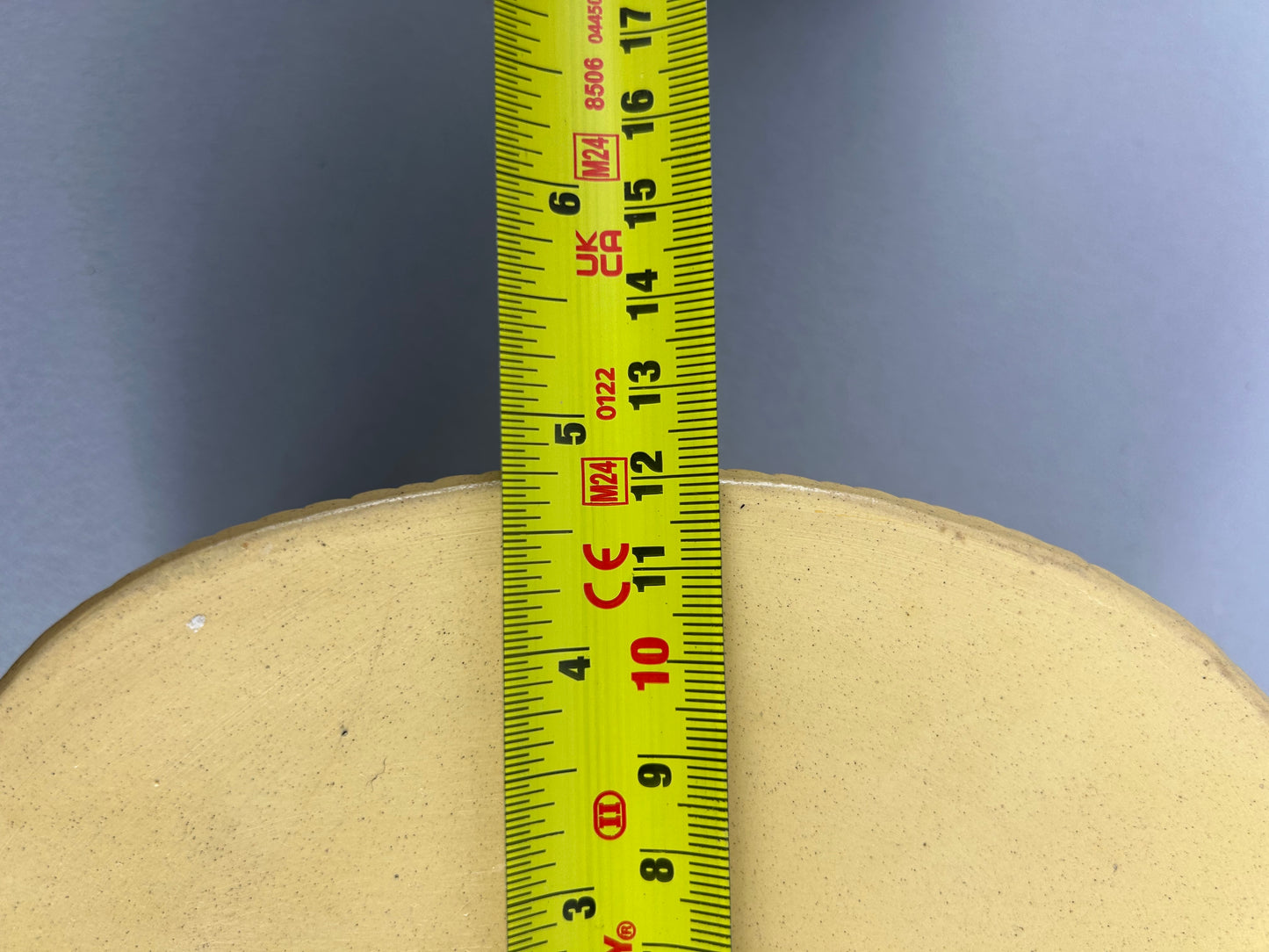
This attractive antique tureen dish is a fine example of 19th‑century Spode caneware, notable for its warm straw‑coloured body and crisply modelled neo‑classical ornament. Of compact oval form, measuring approximately 16 cm by 12 cm at the base, it was conceived as a small covered serving tureen or sauce dish and would once have formed part of a more extensive Spode dinner or dessert service. The piece comes with provenance from a Phillips auction, where it was catalogued from the Geoffrey Eiss collection, and retains both the old paper label and lot stickers to the underside of the cover.
The exterior of the straight‑sided body is richly decorated in applied relief with a continuous trailing ivy garland, the leaves and berries arranged in high, sharp detail that stands out pleasingly against the finely speckled caneware ground. The upper and lower rims are encircled by a moulded rope or cable border that reinforces the classical aesthetic often seen on early Spode stonewares, while also framing the band of foliage. The base is plain, lightly recessed, and bears an impressed factory mark that is partially legible in the photographs, consistent with early‑ to mid‑19th‑century Spode production of utilitarian but well‑finished wares.
The domed, conforming cover is particularly striking. It is surmounted by an elaborate knop formed as a cluster of radiating leaves and ribbed, shell‑like flutes, rising to a small circular aperture at the very top. This sculptural finial provides a sculpted focal point when the tureen is displayed and demonstrates the high level of modelling for which Spode’s caneware and stoneware ranges are admired. A rope‑twist moulding runs around the edge of the cover, visually tying it to the borders on the body. The interior of both base and cover is finely finished and glazed, a practical feature that would have helped the vessel resist staining when used for sauces or small savoury dishes.
Caneware, sometimes described as a fine stoneware with a naturally warm, buff‑yellow body, was popular in the late 18th and early 19th centuries as a more refined alternative to ordinary earthenware. Spode was among the leading Staffordshire factories producing this material, often using it for teapots, covered dishes, and classical‑inspired tablewares. The subtle colouring and absence of applied enamels allow the crispness of the moulded decoration to take centre stage, and under sympathetic lighting the present tureen displays attractive variations in tone across its surface.
Condition is commensurate with age and past use. The images show several hairline cracks running vertically through the body and visible inside the base; these hairlines are stable but should be noted by collectors and conservators. There are also small chips and minor losses to the applied decoration at the top of the cover, particularly to the edges of a few of the leaf tips and fluted elements of the knop, along with tiny rim nicks around the rope borders. The surface shows light wear, occasional firing specks and minor discolouration, all typical of antique caneware of this period and confirming its authenticity rather than detracting from its charm.
Despite these defects, the tureen remains an appealing and highly displayable piece of Spode caneware, especially for collectors who appreciate early stonewares, decorative relief moulding, and items with documented auction provenance. It would sit well in a cabinet of English ceramics alongside jasperware, dry‑bodied stonewares and early earthenwares, or could be used as a decorative lidded dish on a sideboard, where the ivy garland and ornate knop invite closer inspection. For those researching Spode caneware, the combination of factory mark, decorative scheme and auction labels provides a useful point of reference and a tangible link to both 19th‑century ceramic history and late 20th‑century connoisseurship.