Unbranded
Antique Spode Gold Imari Handled Dish Pattern 1891, Staple Repaired
Antique Spode Gold Imari Handled Dish Pattern 1891, Staple Repaired
Couldn't load pickup availability
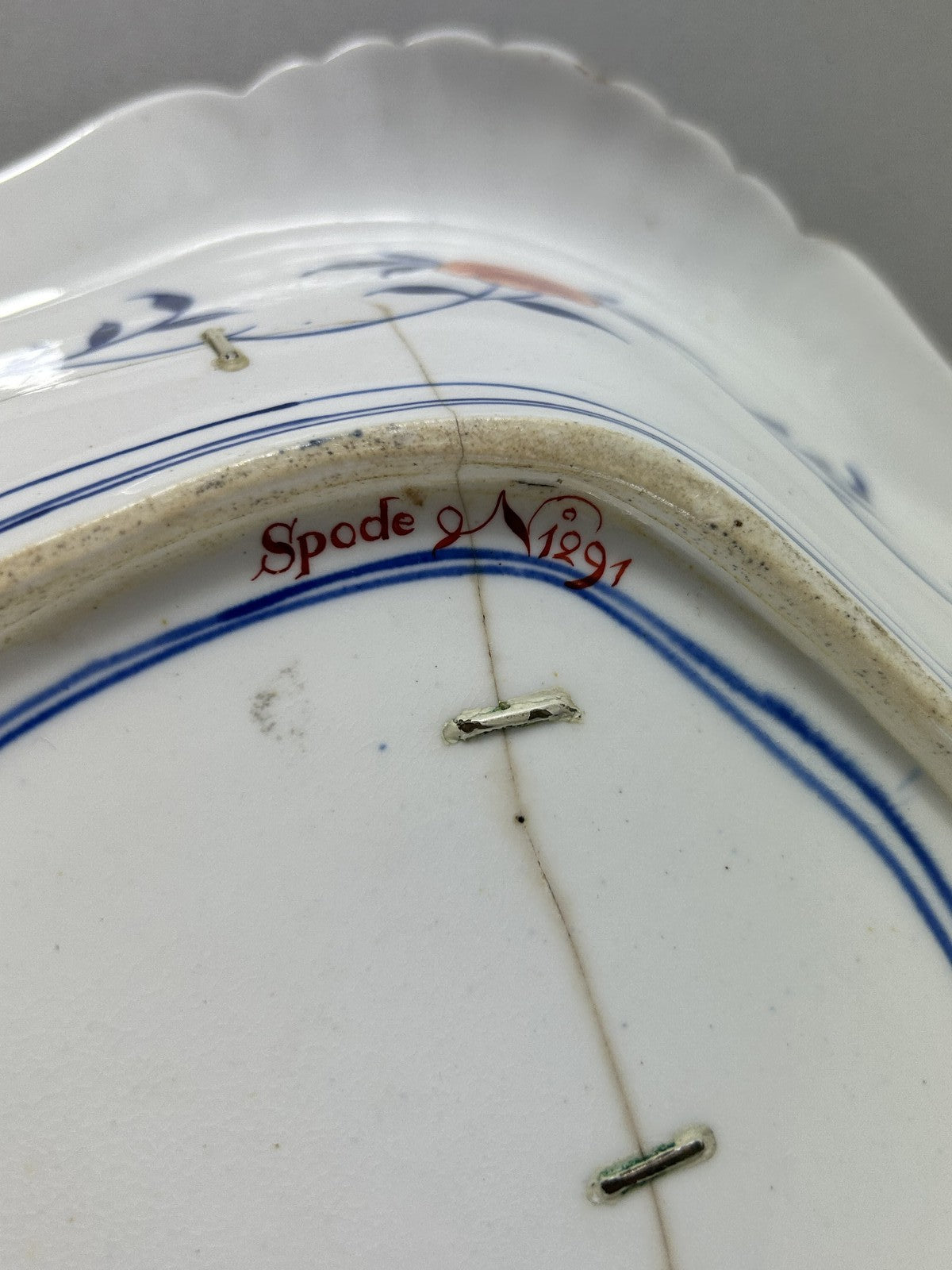
This striking handled dish is an early 19th‑century Spode porcelain example decorated in the rich “Gold Imari” palette and identified to pattern number 1891. Measuring approximately 21.5 cm by 24.5 cm, the dish has a shaped, lobed outline with one moulded side handle, a form Spode used for dessert and serving wares during the Regency period. The underside carries the hand‑painted iron‑red mark “Spode N1891”, confirming production at the Spode factory in Staffordshire and tying the piece to a documented pattern in the Spode pattern books.
The decoration takes its inspiration from Japanese Imari porcelain but is interpreted in a distinctly English manner. The central oval panel shows a finely painted garden scene with a brightly coloured songbird perched on a flowering branch, surrounded by chrysanthemum and other stylised blooms. Around this reserve, the cavetto is filled with dense gilt scrollwork and cloud‑like spirals reserved on deep cobalt blue, an effect often referred to as “gold brocade” ground. Radiating outwards are bold cartouches outlined in dark blue and iron‑red, each enclosing fantastical phoenix‑like birds, a favourite Spode motif of the period. Between these cartouches are rich panels of red and iron‑orange with gilt and green foliage and white chrysanthemum blossoms, all meticulously hand painted and heightened with jewelled gilding.
The moulded rim of the dish is scalloped and finished with a continuous band of burnished gilding which shows expected age‑related rubbing, particularly at the high points. The single side handle is ribbed and scroll‑ended, left largely white but enriched with delicate gilt linear ornament to frame the more lavishly decorated interior. On the underside, simple underglaze blue double circles and scattered iron‑red flower sprays provide a pleasing contrast to the opulent front and are typical of Spode’s early 1800s finishing style.
A notable and historically interesting feature of this piece is the period staple restoration. Several metal staples are visible on the underside, bridging an old fracture that runs diagonally across the base. This type of repair, achieved by drilling small paired holes and inserting metal “staples” to pull the fracture together, was commonly undertaken in the 19th century for valuable porcelain and demonstrates the esteem in which such an item was held. The crack is visible from the front but the repair remains stable, and collectors often regard these early restorations as part of the object’s history rather than a detraction.
The pattern 1891 Gold Imari wares are highly regarded by collectors of Spode and British porcelain for their combination of Japanese‑inspired design and superb English craftsmanship. The dense raised gilding, bright enamels and carefully composed asymmetric scenes exemplify the taste of the Regency era. Despite the old damage and professional staple repair, this dish presents very well on display, offering a vibrant palette of cobalt blue, iron‑red, soft pink, apple green and extensive gold that catches the light beautifully. It would make an excellent reference piece for students of early Spode patterns, an atmospheric accent in an Imari or mixed English porcelain cabinet, or a decorative object for an interior that favours opulent, historically resonant ceramics.