Unbranded
Antique Spode N1891 Hand Painted Bird & Rose Plate with Staple Repair
Antique Spode N1891 Hand Painted Bird & Rose Plate with Staple Repair
Couldn't load pickup availability
This attractive antique Spode plate, pattern “N1891”, is a fine example of early 19th‑century English porcelain combining accomplished hand painting with rich gilding. The plate has an asymmetric, shaped outline with one moulded side handle, typical of Spode dessert wares dating to the Regency period. Measuring approximately 21.5 cm by 24.5 cm, it would originally have formed part of a dessert service, perhaps used for fruits or sweetmeats.
The central decoration features a delicately hand painted bird perched on a fruiting branch. Executed in iron‑red enamels with subtle shading and fine line work, the bird is surrounded by stylised foliage and berries picked out in red and olive green, with small touches of gilding. This restrained yet detailed vignette is very characteristic of Spode’s chinoiserie‑influenced naturalistic patterns of the early 1800s and is typical of the N1891 pattern family.
Encircling the cavetto is a bold border of iron‑red roses and leaves, finely printed then richly hand‑coloured and sharpened with over‑painting. Between each bloom, the painter has added subtle leaf veining and tonal variation, demonstrating the high level of workmanship associated with the Spode factory at Stoke‑on‑Trent. The whole design is framed by a scalloped inner line of soft olive‑green and a broad outer band of burnished gilding which follows the undulating rim. The gilded rim remains present but shows honest wear and small areas of rubbing consistent with age and use.
The shaped handle area is particularly decorative, with moulded scrolls and fluting highlighted in gold. The romantic, curving outline and opulent gilding firmly place this piece in the Regency taste. The underside is unprinted but would originally have carried the painted “Spode N1891” mark that the user records, helping to date and attribute the piece to the early 19th century Spode porcelain works.
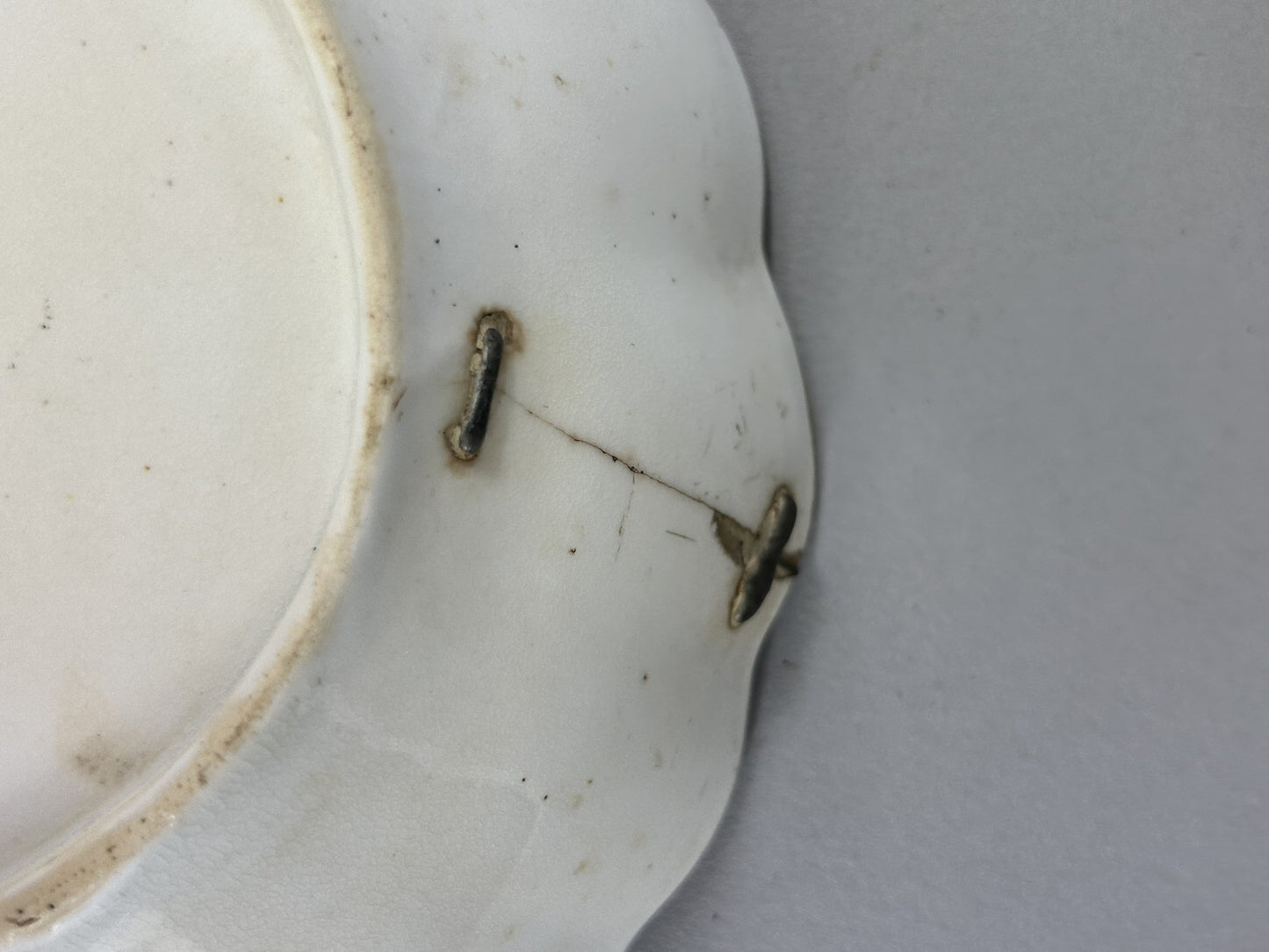
Of special interest to collectors is the presence of traditional staple repairs, clearly visible both front and back. Several iron or brass staples have been professionally inserted through pre‑drilled holes to stabilise an old break running from the rim through the handled end. There is also an associated crack visible across part of the rim. These “riveted” restorations, now obsolete, were a common and valued technique in the 19th century, indicating that the plate was treasured enough to justify expert repair rather than being discarded. The staples have toned with age and show some oxidisation and staining in the surrounding glaze, adding to the plate’s antique character.
Condition overall is sound but clearly antique: the staple‑repaired crack is firm yet visible; there are further hairlines and glaze crazing to the body, some surface discolouration and spotting to the central ground, rubbing and minor loss to the gilding, and small kiln or usage marks commensurate with age. Despite these flaws, the decoration reads well, and the bird and floral border remain fresh and attractive. The plate displays beautifully and offers an evocative glimpse into early 19th‑century dining and the history of ceramic repair.
This Spode N1891 bird and rose plate is ideal for collectors of early English porcelain, Spode pattern enthusiasts, and anyone who appreciates the narrative charm of staple‑repaired ceramics. It would make a characterful display piece on a wall or in a cabinet, where the combination of hand painted decoration, rich gilding and visible historical repairs can be fully appreciated.