Moffitts Antiques
Antique Staffordshire Fruit Seller Figurine, c.1840, 15cm
Antique Staffordshire Fruit Seller Figurine, c.1840, 15cm
Couldn't load pickup availability
This charming antique figurine is a mid‑19th century English Staffordshire earthenware model of a seated fruit seller, a classic subject in the popular “ordinary people” genre that flourished in the Staffordshire Potteries around 1830–1860. Standing approximately 15 cm high, the figure is hollow‑cast and lightly potted, with the characteristic creamy earthenware body and soft lead glaze associated with early Victorian cottage and mantelpiece figures.
The young woman is shown seated on a stylised rocky mound, a common Staffordshire convention that provides both stability and a sense of rustic setting. She wears a full white dress scattered with small hand‑painted puce sprigs, over which falls a pink apron modelled in low relief. Around her shoulders is a boldly painted green shawl, its rich tone contrasting appealingly with the paler dress and linking visually with the foliage in the basket she holds. Her wide‑brimmed hat, resting at a slight angle, frames a delicately painted face with small, well‑defined features, rosy cheeks and softly shaded hair – all typical of early Victorian figure painting from the region.
In her hands she supports a moulded basket brimming with produce, including clearly defined fruit forms and foliage picked out in yellow, puce, green and touches of red enamel. This identifying attribute places her within the “fruit seller” or “market girl” type, a subject that appealed strongly to contemporary tastes for pastoral and domestic themes. Figures of vendors and agricultural workers were commonly displayed on mantelpieces and shelves, celebrating idealised rural life at a time of rapid industrial change.
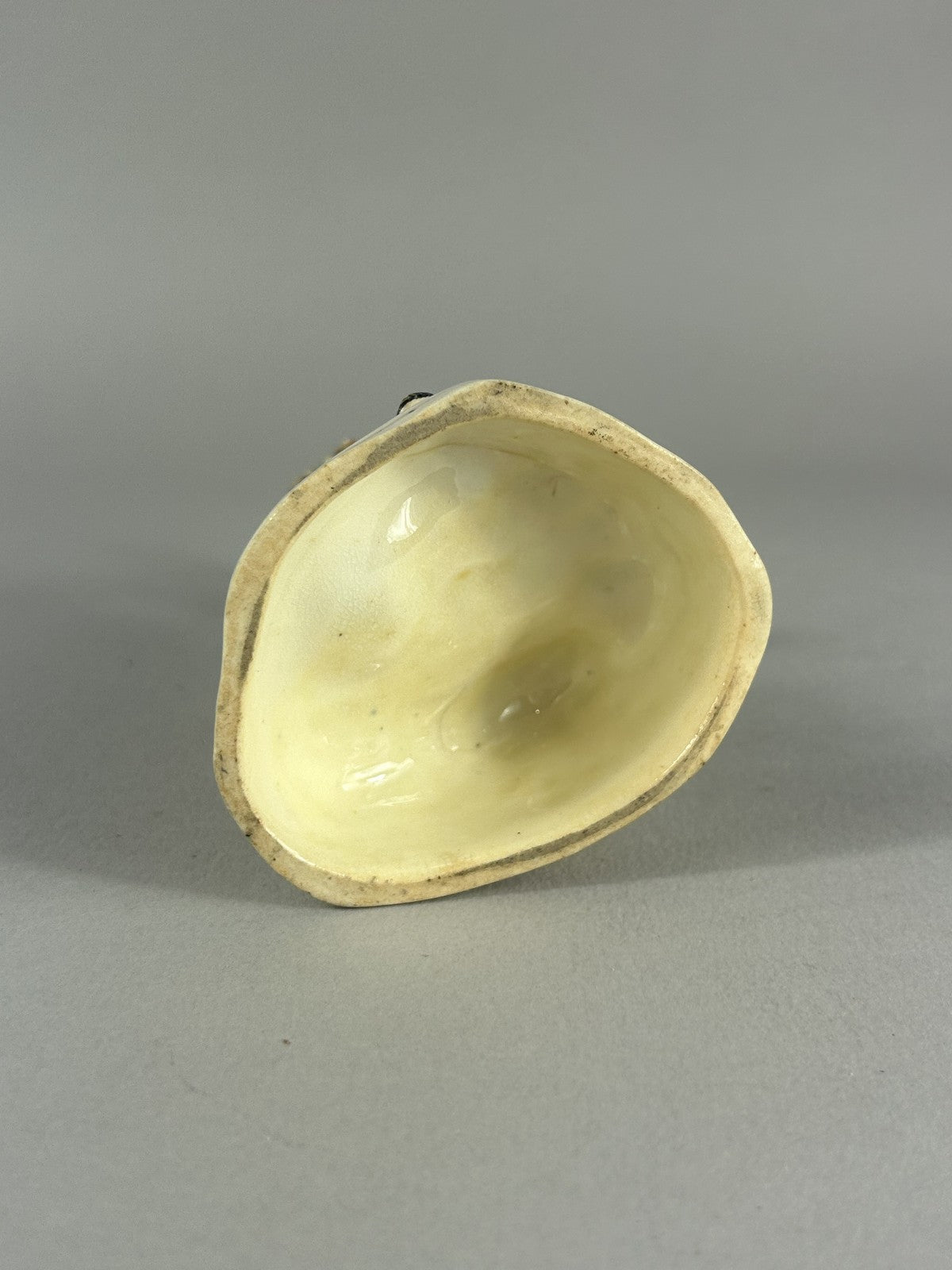
The piece is slip‑cast and then enamelled over a clear lead glaze, rather than underglaze painted. The underside is unglazed around the footrim, revealing the warm buff earthenware body and confirming its traditional Staffordshire manufacture. There are no factory marks, which is entirely typical of early‑ to mid‑19th‑century potbanks that produced such figures for the mass market rather than as marked “fine” wares. The slight asymmetry in modelling, the pooling of glaze in the interior, and minor firing imperfections further support an early Victorian date and authentic hand production.
Condition is generally good for age but with honest signs of use and display that collectors of Staffordshire figures often value. The user notes correctly record that one arm has been restored; close inspection shows an old, competent repair to the right forearm and elbow area, now stable and visually sympathetic under normal viewing. There is typical age‑related wear to the enamel on the shoes and high points of the hat and basket handle, along with scattered glaze crazing and a few small surface stains and firing specks, particularly on the base and around the hat brim. None of these detract significantly from the figure’s overall charm and they support its period authenticity.
From a collecting perspective, this figurine represents an appealing example of early Victorian Staffordshire “flatback” style modelling, although here rendered fully in the round. The relatively compact 15 cm height makes it ideal for display in a mixed group of figures, yet the strong palette of green, pink and ochre ensures it stands out visually. The fruit‑seller subject has broad decorative and social‑history interest, resonating with themes of market life, harvest and rural labour.
For those building a collection, this piece would sit comfortably alongside other c.1840–1860 Staffordshire figures of street vendors, shepherdesses, children with animals, or allegorical pastoral types. Its modest scale and accessible subject also make it a good introductory piece for new collectors wishing to acquire a genuine 19th‑century Staffordshire figure with good original enamel colour. The documented restoration to the arm should be noted in any catalogue description, but the figure remains structurally sound and highly decorative, retaining the naïve charm and period character that have made these wares enduringly popular with enthusiasts of antique English ceramics.