Moffitts Antiques
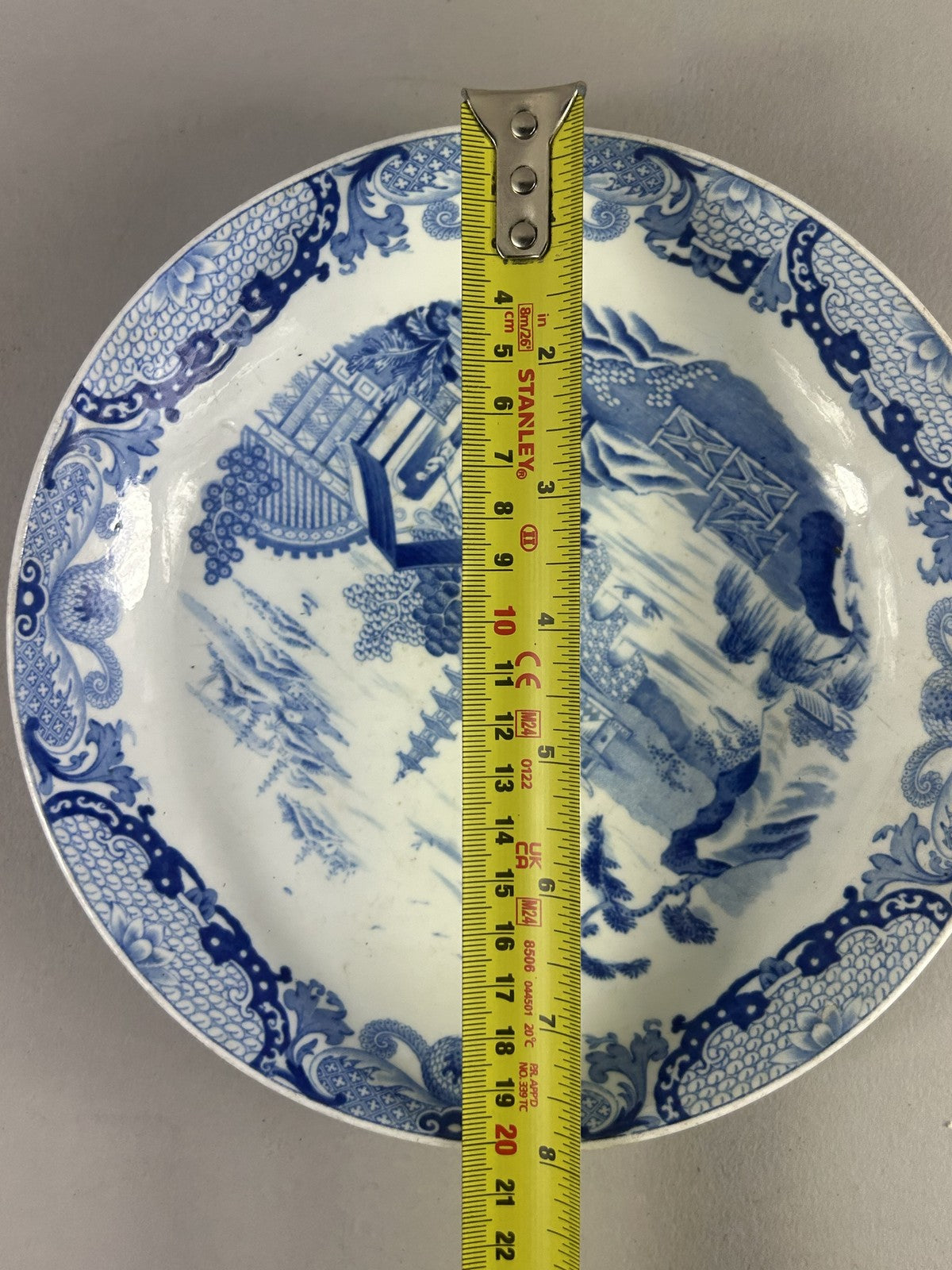
Antique Wedgwood blue and white chinoiserie plate, 20cm c.1820
Antique Wedgwood blue and white chinoiserie plate, 20cm c.1820
Couldn't load pickup availability
This attractive blue and white transfer-printed plate is an early 19th‑century example of Wedgwood’s commercial porcelain output, decorated in the ever‑popular chinoiserie taste. Measuring approximately 20 cm in diameter, it is a useful cabinet or dessert size, ideal either for display or for completing an antique table service.
The front of the plate is richly printed in underglaze cobalt blue with a romantic oriental river landscape. In the foreground a small pavilion stands on a raised terrace with steps descending toward the water, where a figure is shown standing beneath a sheltering roof. Behind, a stone bridge arches gracefully across the river, leading the eye toward further pavilions and a tall pagoda set amongst stylised trees, rocky outcrops and distant mountains. The composition is typical of early 19th‑century English chinoiserie, drawing inspiration from Chinese export porcelain while remaining distinctly Western in its handling of perspective and detail.
Encircling the central landscape is an elaborate border of linked cartouches and foliate scrolls, alternating with scale and diaper grounds. The scrolling panels, filled with stylised lotus and chrysanthemum motifs, frame the well of the plate and provide a strong decorative contrast to the more open central scene. The quality of the transfer work is good, with fine line definition and well‑modulated shading that creates depth in the architecture and foliage. The blue has fired to a medium cobalt tone, with some natural variation where the transfer was dabbed and sponged, adding character and evidence of early industrial production.
The reverse of the plate is plain glazed, with a narrow footrim and the simple printed Wedgwood mark in blue. This straightforward block‑letter “WEDGWOOD” backstamp is consistent with early 19th‑century factory practice, before the introduction of more complex trademark devices later in the century. The paste appears fine and white with a clean, glassy glaze, typical of Wedgwood’s porcelain body of this period rather than later earthenware. Light kiln speckling and tiny glaze imperfections are visible under close inspection, all characteristic of authentic period manufacture.
Condition appears generally sound from the images provided. The rim looks free from major chips or structural cracks, though minor fritting, glaze wear and small utensil marks in the well should be expected in a working piece of this age. Any slight surface scratching from cutlery or stacking, together with faint discolouration in the recesses of the design, read as honest patina rather than damage and help confirm the plate’s age and originality.
Pieces like this sit at an interesting moment in Wedgwood’s history, when the firm was adapting the success of its 18th‑century wares to a rapidly expanding middle‑class market. Blue and white oriental scenes remained a staple of fashionable dining and tea services, and this plate would originally have formed part of a larger set used for dessert or for informal meals. Today it would display well on a wall, in a dresser rack or as part of a mixed group of blue and white ceramics, and it also retains practical use for serving small cakes, fruit or cheese, provided normal care is taken.
For collectors, the appeal lies in the combination of an established maker, a classic chinoiserie pattern and a convenient medium size that fits easily into most displays. The strong, even printing, legible Wedgwood mark and early 19th‑century dating place it as a desirable but still accessible piece of British porcelain. It would complement other Wedgwood blue and white patterns or sit happily alongside contemporary wares by Spode, Davenport and Minton.
Overall, this 20 cm Wedgwood blue and white porcelain plate is a decorative and historically interesting survivor from the early 1800s, exemplifying the quality and style that made Wedgwood a leading name in English ceramics.