Moffitts Antiques
Davenport Stone China Imari Plate c1830 – 25cm Bamboo & Peony Design
Davenport Stone China Imari Plate c1830 – 25cm Bamboo & Peony Design
Couldn't load pickup availability
This attractive antique plate is an early 19th‑century Davenport “Stone China” example, decorated in a richly coloured English Imari palette. Measuring approximately 25 cm in diameter, it represents the high quality and fashionable oriental‑inspired tablewares produced at the Davenport factory in Longport, Staffordshire, during the Regency to early Victorian period.
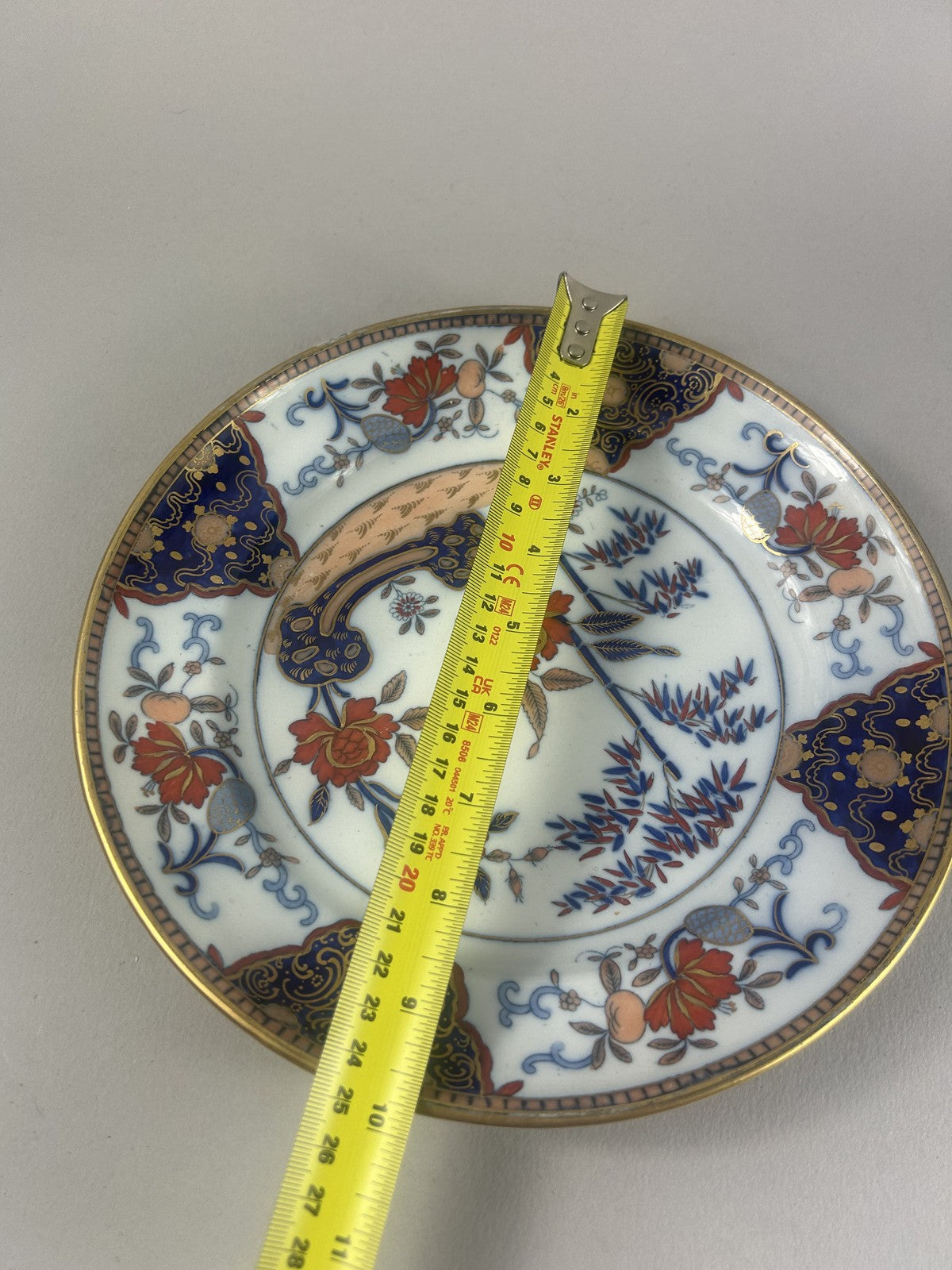
The front of the plate is decorated with a striking central roundel featuring stylised bamboo and flowering peonies growing from a sandy mound, flanked by a dark cobalt rockwork motif enriched with dense hand‑applied gilding. Around this centre runs a broad band of further floral ornament, with iron‑red chrysanthemum‑type blooms, buds and fruiting stems in soft peach and underglaze blue, intertwined with scrolling foliate tendrils. At the rim, four large corner reserves of deep navy cobalt create a bold frame; they are heavily embellished with fine gilt scrollwork, diapering and stylised flowerheads, producing the luxurious “Japan” or Imari effect that was especially popular in Britain around 1815–1840.
The colour scheme is typical of Davenport’s interpretation of Japanese Imari porcelain, combining underglaze cobalt blue with overglaze iron‑red enamels, peach‑flesh tones and generous gilding. The gilded outer edge is finished with a repeated block or tooth border, giving a neat visual termination and helping protect the rim from wear. The design number, hand‑painted in red on the reverse, further confirms the plate as part of a specific Davenport pattern series, likely produced for a matching dessert or dinner service.
The reverse shows the printed circular “DAVENPORT / STONE CHINA / LONGPORT / STAFFORDSHIRE” mark in underglaze blue. This factory mark, together with the “Stone China” designation, places the piece firmly in the early 19th century, when Davenport was developing its durable ironstone‑type body to compete with contemporary wares from Spode and Mason. Although described as “Stone China”, the body is a fine, dense ironstone ceramic closely related to porcelain, prized for its strength and ability to carry bold enamel and gilt decoration.
The plate exhibits the shallow well and gently everted rim characteristic of early 1800s dessert or cabinet plates. It would originally have formed part of a larger service used either for formal dining or as an impressive display on a sideboard or in a cabinet. Today, collectors value such Davenport Imari pieces for their strong graphic patterns, period charm and the way they reflect the British fascination with East Asian design. The combination of bamboo and peony motifs, together with the rockwork and scrolls, is a conscious adaptation of Japanese prototypes, filtered through Regency taste.
Condition, from the images, appears generally good for its age, with some expected minor wear to the gilding at the high points and rim, and small firing or usage marks to the underside typical of early stone china manufacture. The decoration remains bright and crisp, and the clarity of the printed backstamp enhances its desirability to collectors, dealers and decorators seeking an authentic early 19th‑century English Imari plate. As a display piece, it works well either mounted on a wall, in a stand, or as part of a grouped arrangement with other Davenport, Spode or Mason’s Ironstone Imari wares.
Overall, this 25 cm Davenport Stone China plate is a fine example of English Imari decoration from the early 1800s, showcasing the factory’s technical skill, vibrant palette and successful translation of Japanese design into a distinctly British decorative idiom.