Moffitts Antiques
Early Wedgwood 18thC Creamware Openwork Armorial Dessert Dish
Early Wedgwood 18thC Creamware Openwork Armorial Dessert Dish
Couldn't load pickup availability
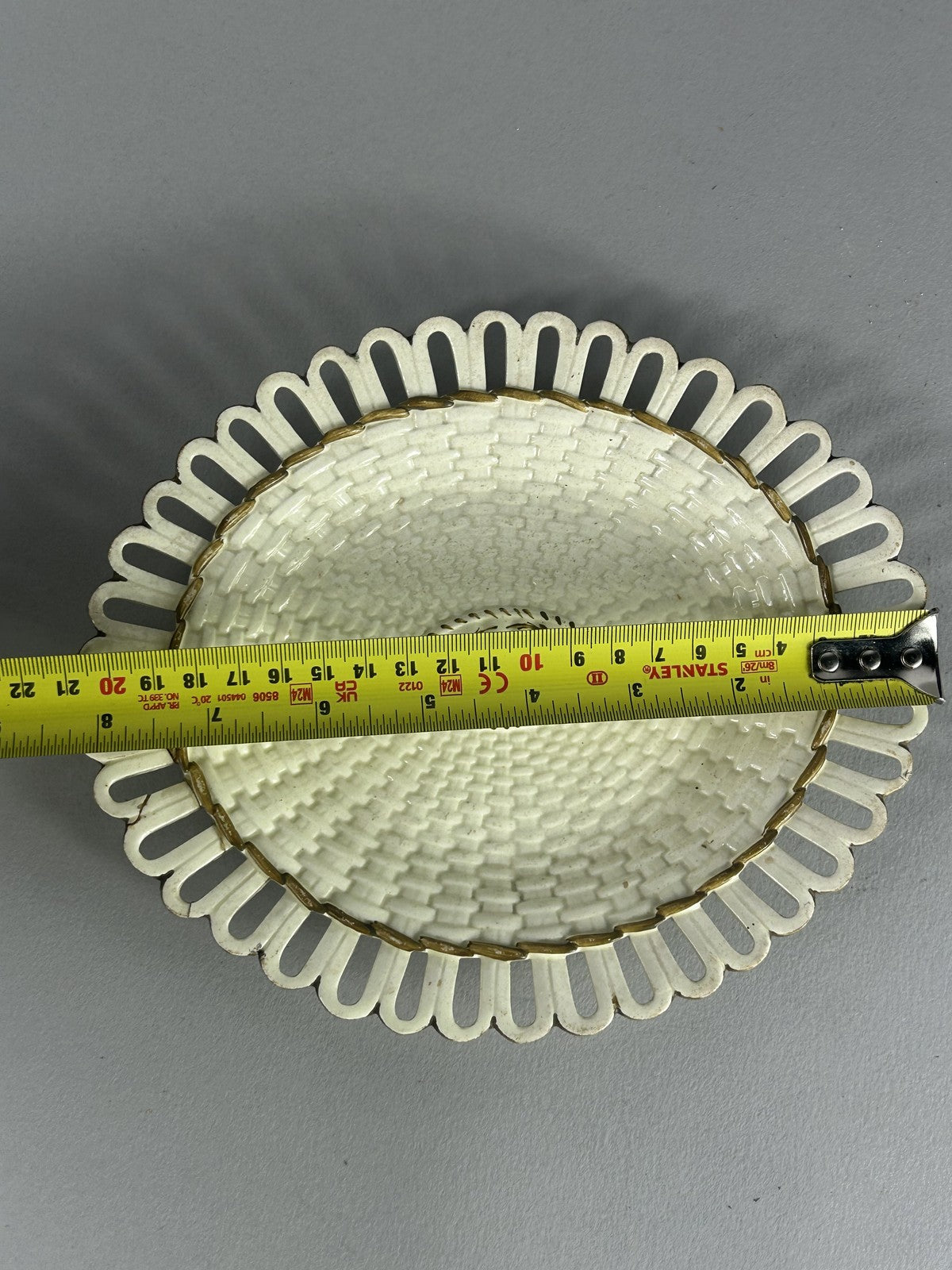
This attractive antique creamware dish is an early piece by Wedgwood, dating to the late 18th century, and shows the refined pierced and basketwork wares for which the factory quickly became renowned. Of shallow circular form, the dish measures approximately 21 cm in diameter and is delicately modelled with an intricate basketweave moulded centre, encircled by a wide openwork or reticulated rim formed of repeated elongated loops. The entire surface is covered in a pale ivory‑toned lead glaze typical of period creamware, subtly pooling in the recesses of the moulding and emphasising the crisp detail of the design.
To the centre of the well is a small armorial or crest device within a circular reserve, highlighted in gilt with a running leafy border. Although now somewhat softened by age and use, the gilding still catches the light, and a further band of gilded “husks” punctuates the inner edge of the pierced border. This combination of refined moulding, restrained enamel and gilt decoration, and technically demanding openwork places the dish firmly within Wedgwood’s high‑quality dessert and table wares of the 1770–1790 period, made for fashionable dining tables and often supplied as part of extensive services.
The underside bears an impressed Wedgwood mark in an early serifed form, consistent with late 18th‑century production at Etruria. There are no additional date or workmen’s codes, again in line with earlier wares. The back shows a shallow footrim and otherwise plain, well‑potted body with an even, slightly warm glaze tone that supports an attribution to creamware rather than later stoneware or pearlware.
Condition is structurally compromised but stable and very much in keeping with the fragility of pierced creamware of this age. Several cracks run through the reticulated rim, visible on both face and reverse, and at least one section appears to have been repaired historically. The staining in some fracture lines suggests old, possibly glue‑based restoration, and there is associated discoloration and small glaze losses around these areas. Minor surface wear, small frits to the extremities of the rim and light utensil marking inside the well are also present, all commensurate with over two centuries of use and handling. Nevertheless, the dish displays well, and the intricate modelling remains crisp.
From a collecting and research perspective, this dish is a useful example of early Wedgwood creamware in a relatively uncommon armorial or crested pattern, combined with an elegant pierced dessert shape. Such pieces illustrate the transition from purely utilitarian creamware to luxury table services produced for gentry and professional households. The openwork rim in particular demonstrates the technical ambition of the factory, as each section had to be carefully cut and finished before firing, with a high loss rate; surviving examples, even when repaired, are therefore increasingly sought after.
Today this dish would make an excellent addition to a collection of 18th‑century English ceramics, Wedgwood creamware, or armorial table wares. It is equally suitable for decorative display on a wall, in a cabinet or on a dresser, where the light can catch the reticulated rim and subtle gilding. While the existing repairs mean it is best regarded as a historical and decorative item rather than for regular use, they do little to diminish its value as a document of early Wedgwood production and Georgian dining culture.