Unbranded
Regency Old Dragons polychrome porcelain coffee can c.1815
Regency Old Dragons polychrome porcelain coffee can c.1815
Couldn't load pickup availability
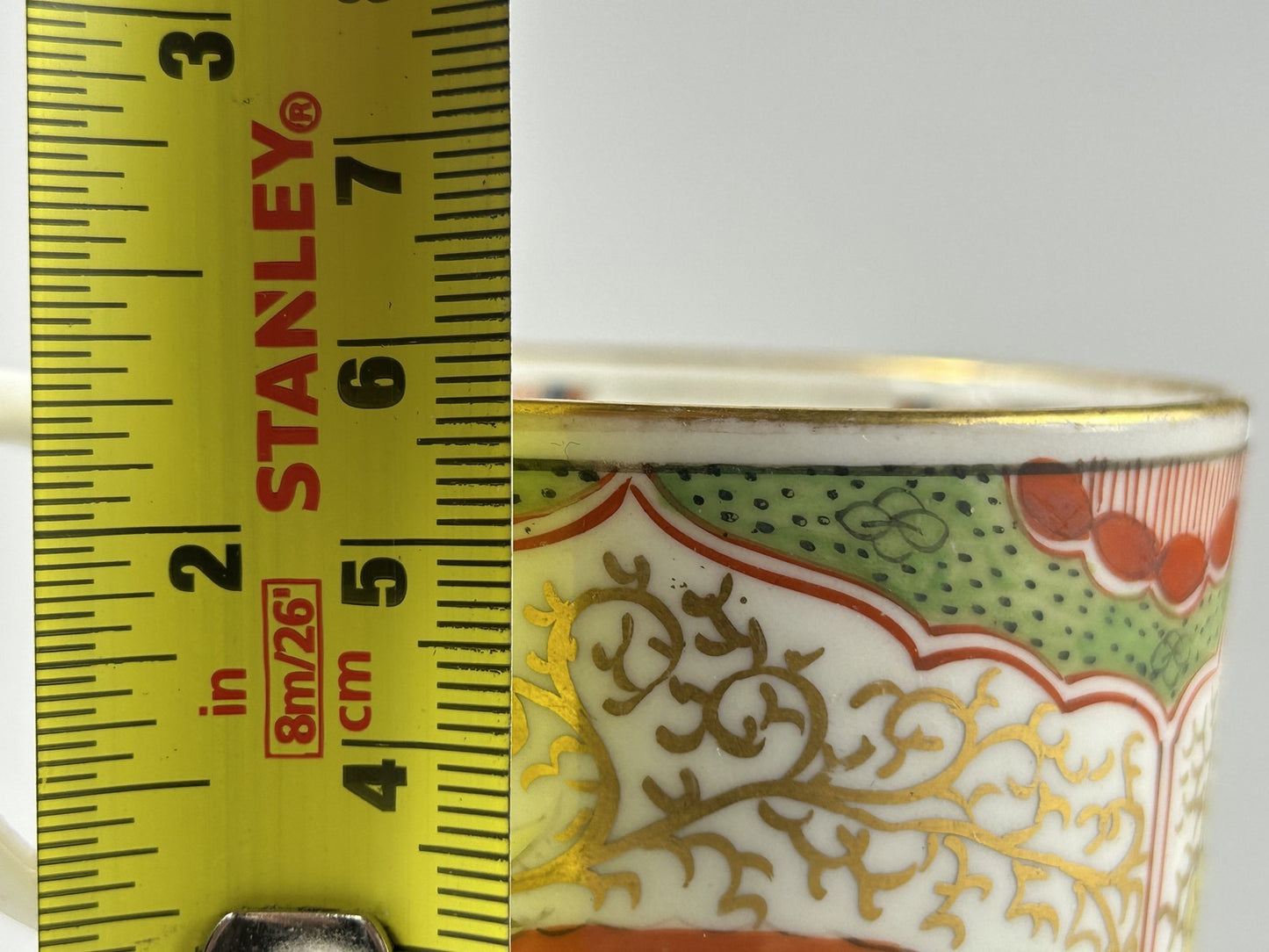
This small porcelain coffee can dates from the English Regency period, around 1810–1820, and is a fine example of brightly enamelled “dragons in compartments” decoration. The straight-sided cylindrical form, loop handle and delicate, almost eggshell body all point to an early 19th‑century coffee can rather than a later teacup. Standing approximately 5.5 cm high and about 7 cm in rim diameter, it is the correct size for strong after‑dinner coffee in the period.
The exterior is divided into arched panels framed in iron‑red and enriched with scrolling gilt arabesques. Within the principal compartments are fantastical dragon‑like beasts, their bodies painted in a deep cobalt blue with yellow manes and green tails, reclining on bright iron‑red bases. These hybrid lions/dragons are characteristic of the “Old Dragons” pattern popular on English porcelain in the early 1800s and echo the taste for exotic Chinoiserie then in fashion. Between the beast panels is a smaller reserve showing a low table or altar supporting a vase and flowers, continuing the oriental theme and balancing the composition visually.
Above the reserves runs a wide frieze of green stippled ground with alternating red scalloped and striped elements, all neatly edged in red. The lower border consists of a striking zig‑zag band of alternating iron‑red and pale green triangles on a white ground, giving a lively, almost architectural base to the design. Gilding outlines the rim, base edge and handle, with additional vertical gilt leafing on the back of the handle providing a refined finish. The interior rim carries a repeat geometric panel of iron‑red, green and blue, adding interest when viewed from above, while the main interior well is left plain white, typical of the period.
The porcelain body is a clean, bright white with a smooth glaze. Condition, as visible in the photographs, is good for its age: the enamels remain strong and glossy, and the gilt is largely intact with only light rubbing at the high points and extremities. There are a few small age‑related specks and minor firing or use marks inside the cup, along with slight wear and discolouration around the footrim and beneath the gilded rim, all consistent with early 19th‑century manufacture and gentle use rather than later damage. No cracks or significant chips are apparent, and the handle retains its original form without restoration.
The unmarked base and overall style suggest production by one of the leading English porcelain factories working in bone‑ash porcelain around 1815, possibly in the Staffordshire or Derby tradition, though many workshops produced closely related dragon patterns and a precise attribution is difficult without a factory mark. Collectors of Regency porcelain, Imari‑influenced patterns and Chinoiserie designs will find this piece particularly appealing. Its compact size and vibrant palette make it ideal for display in a cabinet, yet it also offers historical insight into the fashionable dining and coffee‑drinking customs of the Georgian era. Whether acquired as a stand‑alone decorative accent or to complement an existing service, this “Old Dragons in compartments” coffee can is a charming and well‑preserved survivor from the golden age of English porcelain.