Unbranded
Ridgeway 19th Century Relief Moulded Classical Oval Plate 28cm
Ridgeway 19th Century Relief Moulded Classical Oval Plate 28cm
Couldn't load pickup availability
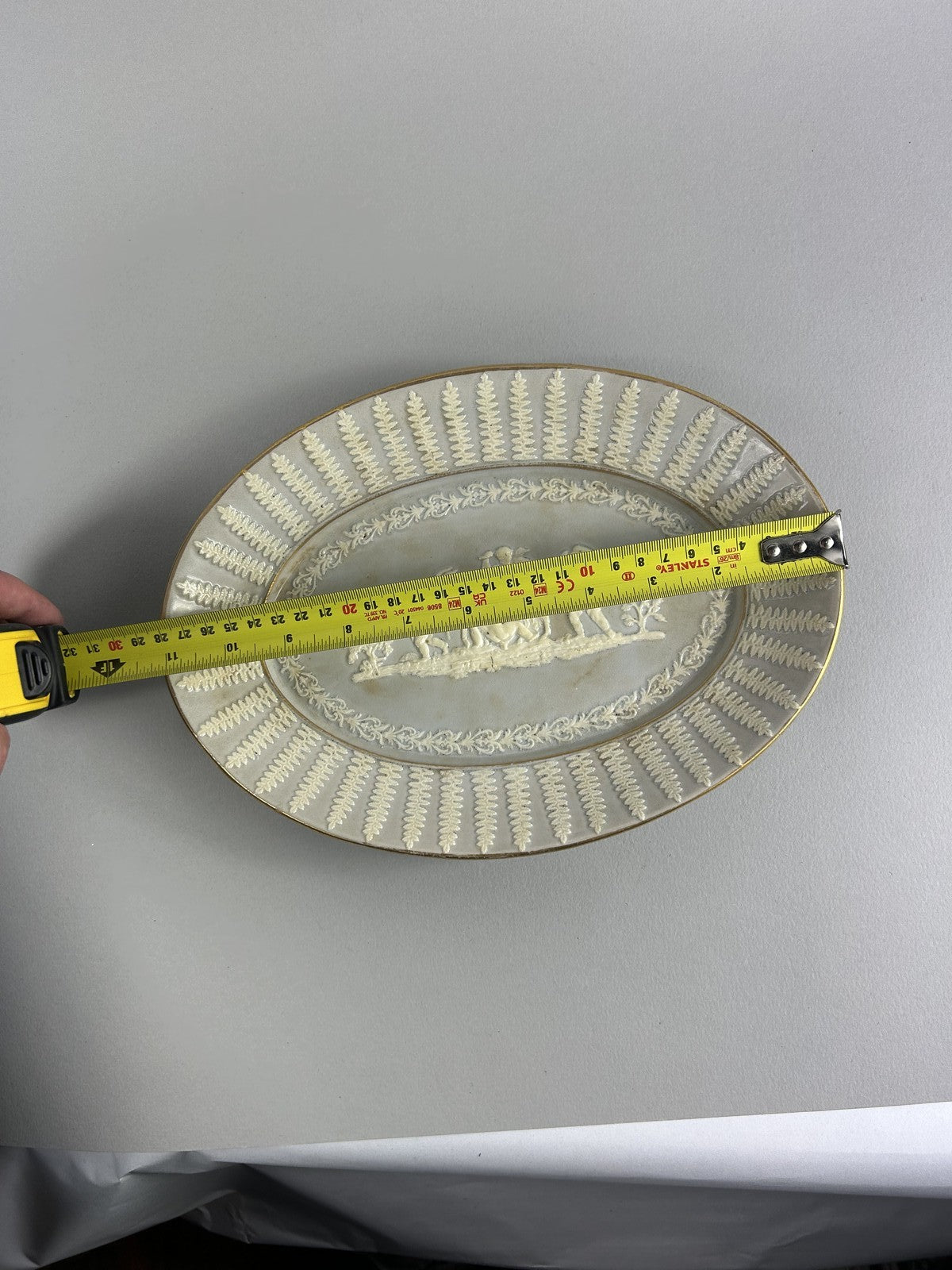
This attractive oval plate is an early to mid‑19th century example attributed to the Ridgeway potteries of Staffordshire, England. Measuring approximately 20.5 cm by 28 cm, it is a fine illustration of the Neo‑classical taste that remained fashionable well into the Victorian era. The plate is made in a pale grey to bluish tone with contrasting cream‑coloured relief decoration, a combination frequently associated with Ridgeway’s stone china and parian‑style wares that echoed the success of Wedgwood’s jasper designs.
The central reserve is decorated with a raised classical scene in ivory‑tinted slip. A group of diminutive figures, probably putti or children in Roman dress, are shown engaged in rustic or sacrificial activity around a goat, with a tree and small shrub balancing the composition. The modelling is intentionally low but crisp, designed to stand out in relief against the smooth, lightly tinted ground. Encircling this vignette is a finely moulded border of scrolling foliage, creating an elegant frame and leading the eye outward to the rim.
The broad rim carries a striking radiating pattern of fern or feather fronds in high relief, each element carefully repeated to form a sunburst effect. This type of border, both botanical and rhythmic, is very much in keeping with British Regency and early Victorian design vocabulary. A narrow hand‑applied gilt line defines the inner edge of the cavetto and the outer lip of the rim, adding a discreet touch of luxury. Some rubbing and thinning of the gilding is visible, consistent with age and use.
The reverse is plain and unmarked, which is not unusual for Ridgeway utility and dessert wares from this period. The footrim is neatly formed as an inset oval foot, showing minor kiln grit and firing specks typical of 19th‑century manufacture. The glaze is glossy but shows age‑related irregularities and scattered small iron spots. There is noticeable discolouration and staining on the front, particularly within the well and around the relief elements; this appears to be age‑related tea or gravy staining that has seeped into the body through the crazed glaze, rather than evidence of restoration. The body rings with a firm sound when tapped, and no obvious structural cracks or later overpainting can be seen from the images, though potential buyers should allow for the usual light surface wear, utensil marks, and small manufacturing imperfections expected in hand‑made ceramics of this era.
This plate would originally have formed part of a larger service, perhaps for dessert or for serving small savoury dishes. Today it works equally well as a display piece thanks to the strong relief pattern and classical subject. The neutral palette of soft grey and cream allows it to sit comfortably alongside both porcelain and stoneware, making it a versatile choice for collectors of Regency and early Victorian ceramics, or for anyone interested in the evolution of jasper‑inspired relief wares beyond Wedgwood. Its combination of crisp moulding, elegant proportions and genuine period patina gives it considerable decorative presence despite the staining, which many collectors regard as part of the plate’s historic charm.