Moffitts Antiques
Ridgway 19th Century Neoclassical Sprig Porcelain Plate Staffordshire
Ridgway 19th Century Neoclassical Sprig Porcelain Plate Staffordshire
Couldn't load pickup availability
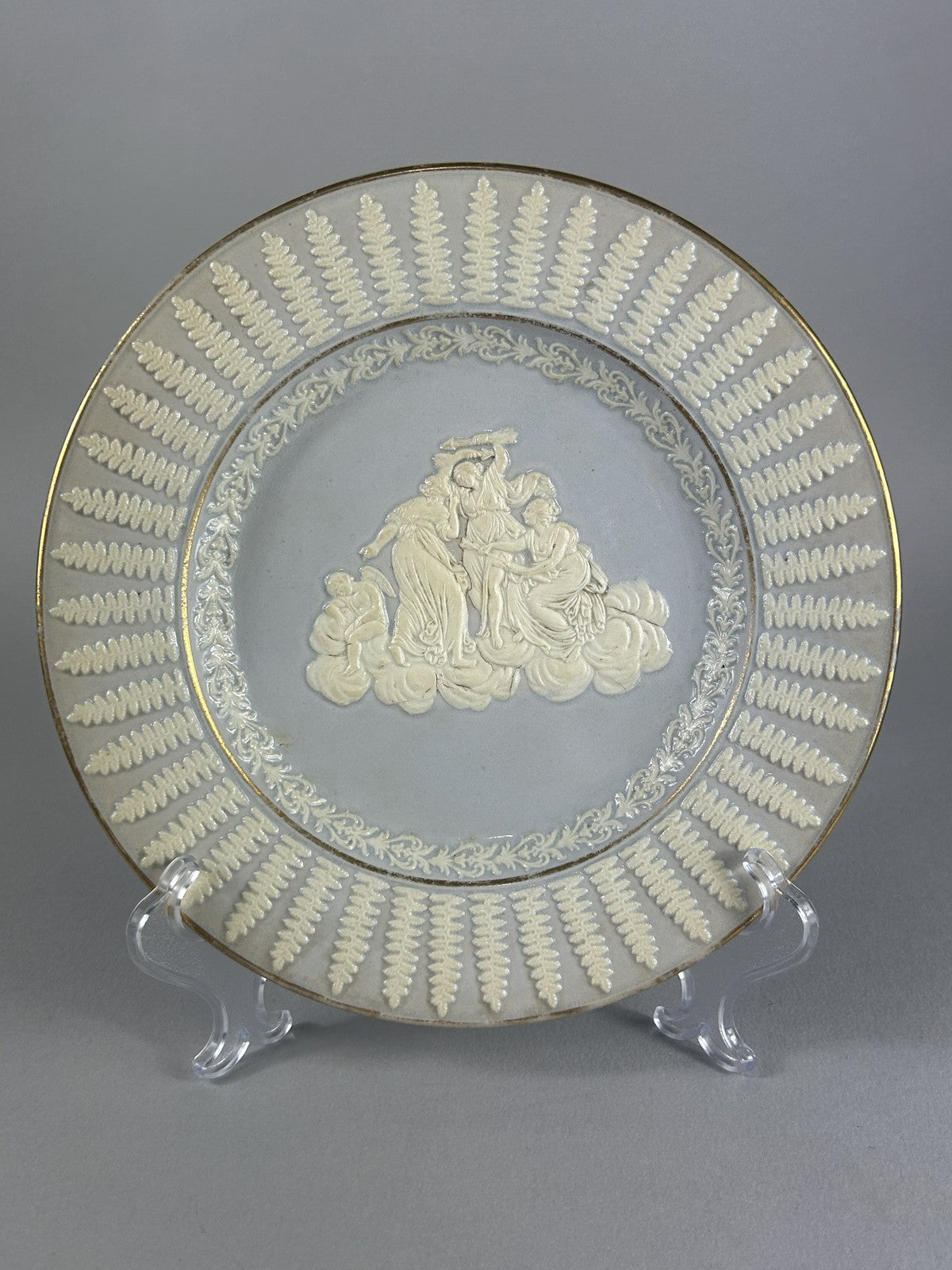
This elegant 19th‑century Ridgway plate is a fine example of English neoclassical taste, produced in Staffordshire during the Victorian era. Measuring approximately 23 cm in diameter, it is formed in a shallow circular shape with a broad rim, carefully potted in porcelain and decorated in a refined, Jasperware‑inspired palette of pale grey‑blue grounds with crisp cream sprig ornament and subtle gilded accents.
The central reserve features a raised neoclassical figural group, modelled in cream against the tinted ground. The scene shows draped classical figures in flowing robes arranged on swirling clouds, typical of the period’s fascination with ancient mythological and allegorical subjects. The sprigging is sharply moulded and applied with good precision, retaining much of its original definition, which suggests quality workmanship associated with the Ridgway factories.
Encircling the cavetto is a narrow border of scrolling foliate sprigs, also in cream, which acts as a visual transition between the smooth central well and the richly decorated rim. The wide rim is embellished with a repeating pattern of upright fern‑like sprigs radiating towards the gilt edge. This radiating fern motif, executed in relief, provides both texture and rhythm, catching the light and giving the plate a sculptural character reminiscent of contemporary Jasper wares, while still clearly produced in glazed porcelain rather than unglazed stoneware.
A fine line of gilding traces the outer lip of the plate and a further narrow gilt line marks the inner border, framing the ornament and lending a subtle richness that was popular in mid‑to‑late 19th century table and dessert wares. In the images, the gilding shows some expected rubbing and minor discontinuities from age and use, but remains largely present and still contributes to the overall decorative effect. The pale ground has a soft, slightly matte appearance, with a few small areas of age‑related discoloration and surface wear, consistent with a well‑cared‑for antique example.
Condition overall appears good for a 19th‑century porcelain plate of this type. No obvious large cracks or structural damage are visible in the photographs, and the rim seems free from major chips. There may be light utensil marks, small firing or glaze imperfections, and typical minor abrasions, all of which are characteristic of genuine period manufacture and long‑term domestic use. Collectors will appreciate that the relief decoration is still crisp and that the plate retains its original character without heavy restoration.
This plate would originally have formed part of a larger dessert or cabinet service, designed to be displayed as much as used. Today it would sit well in a collection of English porcelain, particularly alongside Ridgway, Wedgwood‑influenced neoclassical wares, or other Staffordshire makers experimenting with sprigged decoration in the 1800–1870 period. Its restrained colour scheme and finely modelled classical subject also make it suitable for stand‑alone display on a wall hanger or plate stand, where the relief work can be fully appreciated.
For collectors, the piece illustrates the cross‑fertilisation between porcelain and Jasperware aesthetics in 19th‑century Staffordshire, blending a glazed porcelain body with the popular look of pale grounds and applied cream sprigs. It offers both decorative appeal and historical interest as an authentic Ridgway neoclassical plate from the English porcelain tradition.