Moffitts Antiques
Ridgway 19thC Neoclassical Sprig Plate, Pale Blue English Porcelain
Ridgway 19thC Neoclassical Sprig Plate, Pale Blue English Porcelain
Couldn't load pickup availability
This attractive 19th‑century English porcelain plate is a fine example of Ridgway’s neoclassical taste and the Staffordshire potteries’ response to the great fashion for Jasper-style wares. Measuring approximately 23 cm in diameter, it combines a refined pale blue ground with crisp white sprigged ornament and restrained gilded details, creating a decorative piece that is both elegant and historically interesting for collectors of early Victorian ceramics.
The front of the plate is dominated by a central reserve featuring a high-relief white sprig of a classical female figure attended by putti. She stands in contrapposto on a low mound, holding attributes that suggest allegorical overtones, while the surrounding putti add a playful note typical of late 18th‑ and early 19th‑century neoclassical design. The sprig is sharply moulded, with fine definition to the drapery folds and hair, and sits on the soft blue ground in a way clearly inspired by the famed Jasperware of Josiah Wedgwood. Ridgway and other Staffordshire manufacturers produced porcelain interpretations of this sprigged style to meet continuing market demand for classical subjects well into the 1800s.
Encircling the central vignette is a narrow band of applied foliate scrolls, again in white relief, forming a delicate inner border. Beyond this, the broad rim is decorated with radiating rows of repeated fern-like sprigs, each individually applied and carefully spaced to create a rhythmic, almost architectural pattern. This combination of botanical ornament with mythological figurework is very characteristic of neoclassical revival design in English table wares and makes the plate particularly suitable as a display piece in period-inspired interiors.
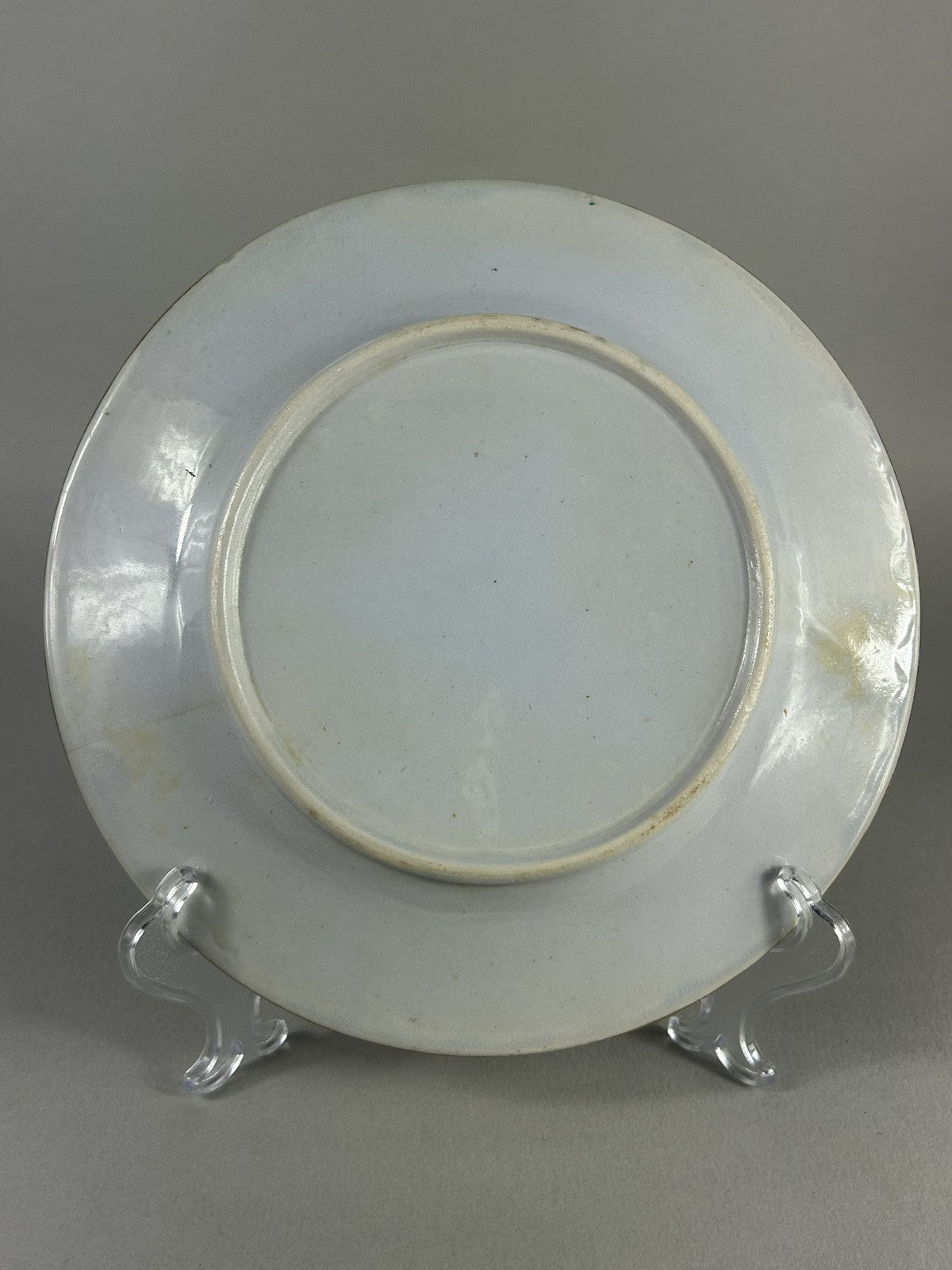
A fine line of gilding separates the inner field from the rim and is repeated around the outer edge of the plate. The gilding appears to be largely intact in the images, with only minor rubbing commensurate with age and gentle use. The pale blue ground shows the slightly greyish cast typical of some Ridgway and allied Staffordshire porcelains of the mid‑19th century, distinct from the intense solid blues of earlier Jasper bodies. The back of the plate is unadorned and unmarked, finished in a simple glaze with a raised footrim. The absence of a printed or painted factory mark is consistent with many Ridgway porcelain plates of the earlier 19th century, where attribution rests on body, glaze, and stylistic comparison.
Condition appears good for a piece of this period. There are no obvious cracks or structural repairs visible in the photographs, and the relief sprigs look generally crisp without major losses. Some small firing specks, light surface marks, and typical age‑related discolouration to the glaze on the reverse can be seen, all of which are normal for Victorian porcelain and add to the authenticity of the piece rather than detracting from its display value. Collectors should, of course, examine the images closely to satisfy themselves regarding any minute imperfections, but overall the plate presents very well.
As a decorative object, this Ridgway neoclassical sprig plate works beautifully as a cabinet or wall display item, especially when grouped with other pale blue and white wares or with Jasperware. For collectors of English porcelain, it illustrates the ongoing influence of classical art and the cross‑fertilisation between stoneware and porcelain design in the Staffordshire factories. Its generous 23 cm size, good condition and harmonious colour palette make it an appealing acquisition, whether you are building a focused Ridgway collection, curating a broader selection of 19th‑century neoclassical ceramics, or seeking a single statement piece with unmistakable period charm.