Moffitts Antiques
Ridgway 19thC Neoclassical Sprig Plate, Staffordshire Porcelain
Ridgway 19thC Neoclassical Sprig Plate, Staffordshire Porcelain
Couldn't load pickup availability
This attractive 19th‑century Ridgway plate is a fine example of English neoclassical taste, produced in Staffordshire and notable for its refined sprigged decoration. Measuring approximately 23 cm in diameter, it presents a cool, pale grey ground with contrasting cream‑coloured reliefs, evoking the celebrated jasper style that was fashionable from the late 18th century onward. The plate is bordered by a delicate gilt rim that subtly frames the design and adds a note of luxury without overpowering the restrained classical palette.
The most striking feature is the crisply moulded central reserve: a classical figural group in raised white sprigging. The scene shows draped figures in a garden or temple setting, gathered around a sculptural pedestal, a motif strongly influenced by Greco‑Roman antiquity and the renewed interest in classical art during the Regency and early Victorian periods. The modelling is sharp and detailed, with fine attention to folds of drapery and the arrangement of the figures, reflecting the high standard of Ridgway’s ornamental porcelain work in the early to mid‑19th century.
Surrounding the central medallion is a narrow border of scrolling foliage in low relief, forming a continuous wreath that further emphasises the neoclassical theme. Beyond this, the wide rim is decorated with radiating fern‑like sprigs, each individually applied in cream against the grey body. This repetitive yet elegant motif creates a strong sense of rhythm across the surface and demonstrates the manufacturer’s expertise in applied sprig work, a labour‑intensive decorative technique that was highly prized at the time.
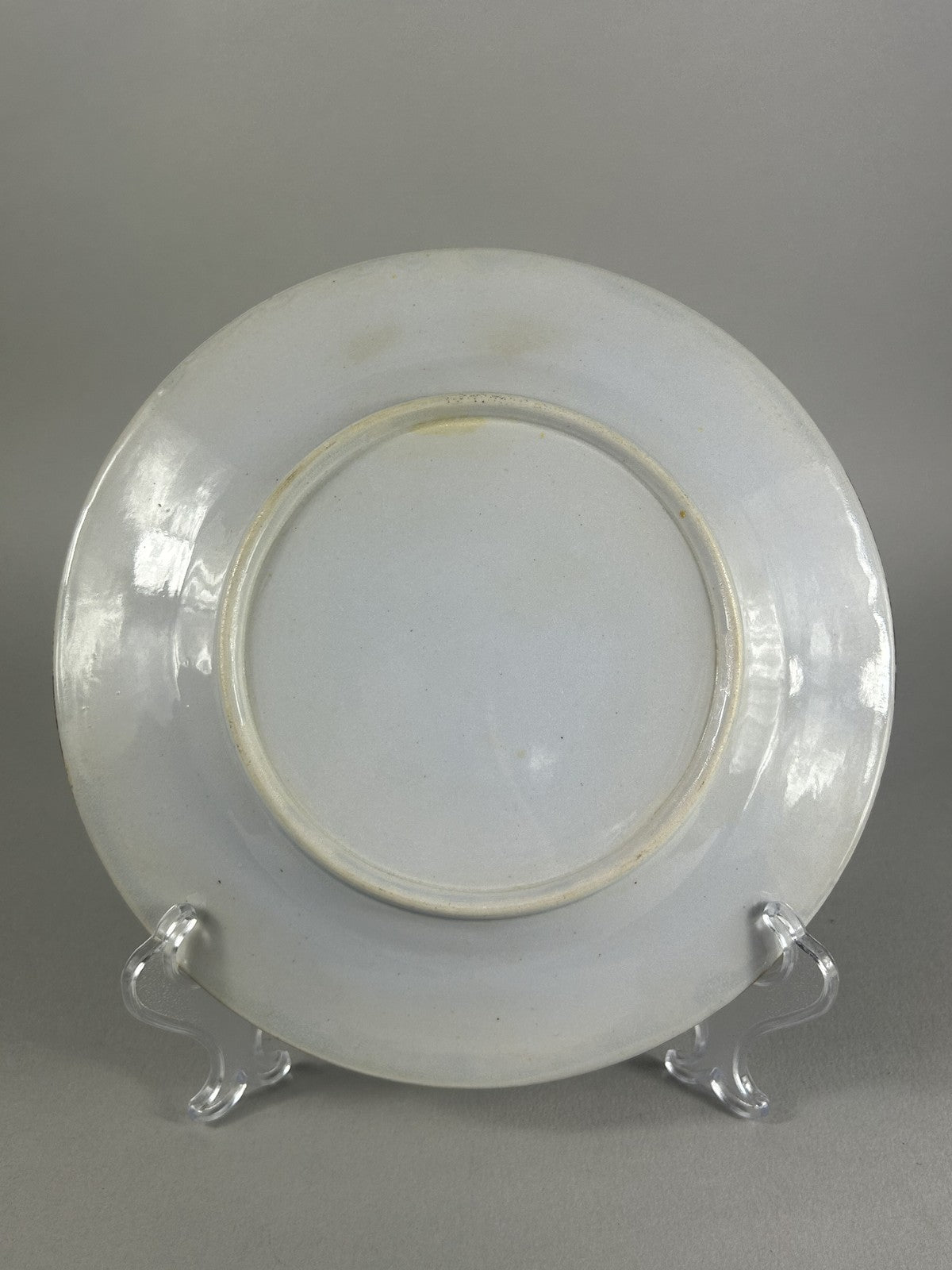
The plate’s condition appears good for its age based on the images provided. The glaze surface retains an even, attractive sheen, and the sprigged details remain crisp with no obvious major losses. The gilded edge shows the expected light rubbing and minor age wear typical of a 19th‑century piece that has been carefully used and handled. No significant cracks or restoration are apparent in the photographs, making it an appealing example for both collectors of Ridgway and enthusiasts of English neoclassical ceramics more broadly.
This plate would originally have formed part of a dessert or ornamental service, intended as much for display as for use. Its restrained colour scheme and refined modelling make it particularly suitable for presentation in a cabinet or on a stand, where the three‑dimensional quality of the relief work can be properly appreciated. Whether used as a standalone statement piece or combined with related sprigged wares, it offers a distinctive link to the Staffordshire potteries’ response to neoclassical design in the 19th century.
For collectors, the plate is of interest as an example of Ridgway’s exploration of jasper‑inspired effects in porcelain, combining a tinted ground with contrasting white sprigging and carefully applied gilding. Its 23 cm size makes it versatile for display, and the classical subject matter has broad decorative appeal. Overall, this is a handsome and well‑preserved piece of English porcelain that illustrates both the technical skill and the artistic ambitions of the Ridgway factory during the period.