Moffitts Antiques
Ridgway 19thC Neoclassical Sprig Shell Plate, Staffordshire Porcelain
Ridgway 19thC Neoclassical Sprig Shell Plate, Staffordshire Porcelain
Couldn't load pickup availability
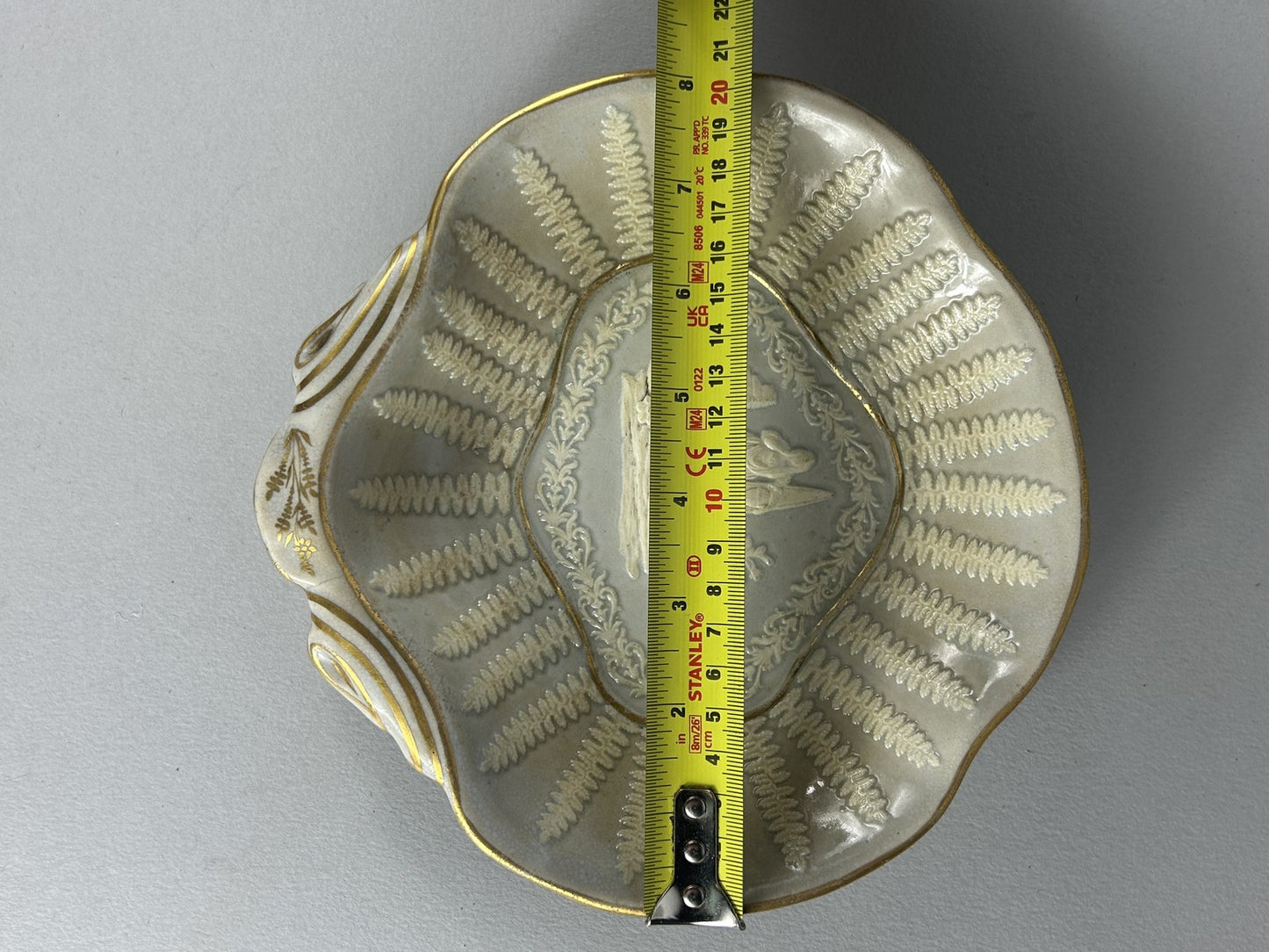
This finely modelled shell-form plate is an attractive example of early–mid 19th century English porcelain, attributed to Ridgway of Staffordshire. Measuring approximately 20 cm across, it combines the fashionable neoclassical taste of the Regency and early Victorian periods with the delicate shell shapes and moulded ornament that Ridgway specialised in.
The body is formed as a stylised scallop shell with gently undulating, lobed edges and a slightly upturned rim, giving the piece a sculptural, almost architectural silhouette. The border and edge are enriched with a hand-applied gilded line that follows the sinuous contour of the plate, emphasising the shell form. Further gilded linear accents appear around the lower front where the shell shape folds over, and on the sides in scrolling bands, adding a refined frame to the moulded decoration.
The central reserve features a crisply moulded neoclassical scene in low relief, executed in a contrasting cream sprig against the soft grey-tinted ground. A robed female figure stands beside an urn and classical architectural fragments, with a tall obelisk or stele rising behind, evoking the romanticised ruins and allegorical subjects popular in early 19th century design. The vignette is bordered by a finely worked wreath of scrolling foliage, also in raised sprig, that creates a cartouche-like focal point within the dish.
Radiating from this centre are rows of moulded fern fronds, arranged in sunburst fashion to fill the well of the plate. These ferns, highlighted in a creamy off‑white slip, provide an appealing textural contrast to the smoother ground and are characteristic of the naturalistic ornament that often appears alongside neoclassical subjects on Ridgway wares. The relief work retains good definition, suggesting careful pressing and firing, and the glaze shows a subtle gloss that picks up the light across the raised sprigs.
The reverse of the plate is plain, with a soft, slightly bluish glaze typical of period English porcelain, and shows the shell outline clearly. There is no visible printed backstamp, which is consistent with many Ridgway pieces from the earlier 19th century that carried only painted or impressed marks, or in some cases no mark at all. Light age‑related crazing and toning to the glaze can be seen, especially to the back, together with the expected minor firing specks and wear to the gilding on the high points. Overall, however, the plate presents in good antique condition, with no obvious major cracks or structural repairs visible in the images.
This shell plate would originally have formed part of a dessert or supper service, intended for sweetmeats, fruit, or small pastries. Today it works beautifully as a cabinet piece, wall display, or focal accent on a sideboard or console table. Collectors of Ridgway and other Staffordshire porcelain will appreciate the combination of shell form, neoclassical sprigged medallion, and fern radiating pattern, as well as the restrained yet effective use of gilding. It also sits comfortably within broader collections of Regency and early Victorian decorative arts, especially those focused on the neoclassical revival and the dialogue between classical and naturalistic motifs in British ceramic design.
With its elegant modelling, subtle palette, and well-preserved relief decoration, this 19th century Ridgway shell plate offers both historical interest and strong decorative appeal, encapsulating the refined yet romantic aesthetic of English porcelain from the period.