Moffitts Antiques
Wedgwood 19thC Green Jasperware Classical Lidded Urn, 24cm
Wedgwood 19thC Green Jasperware Classical Lidded Urn, 24cm
Couldn't load pickup availability
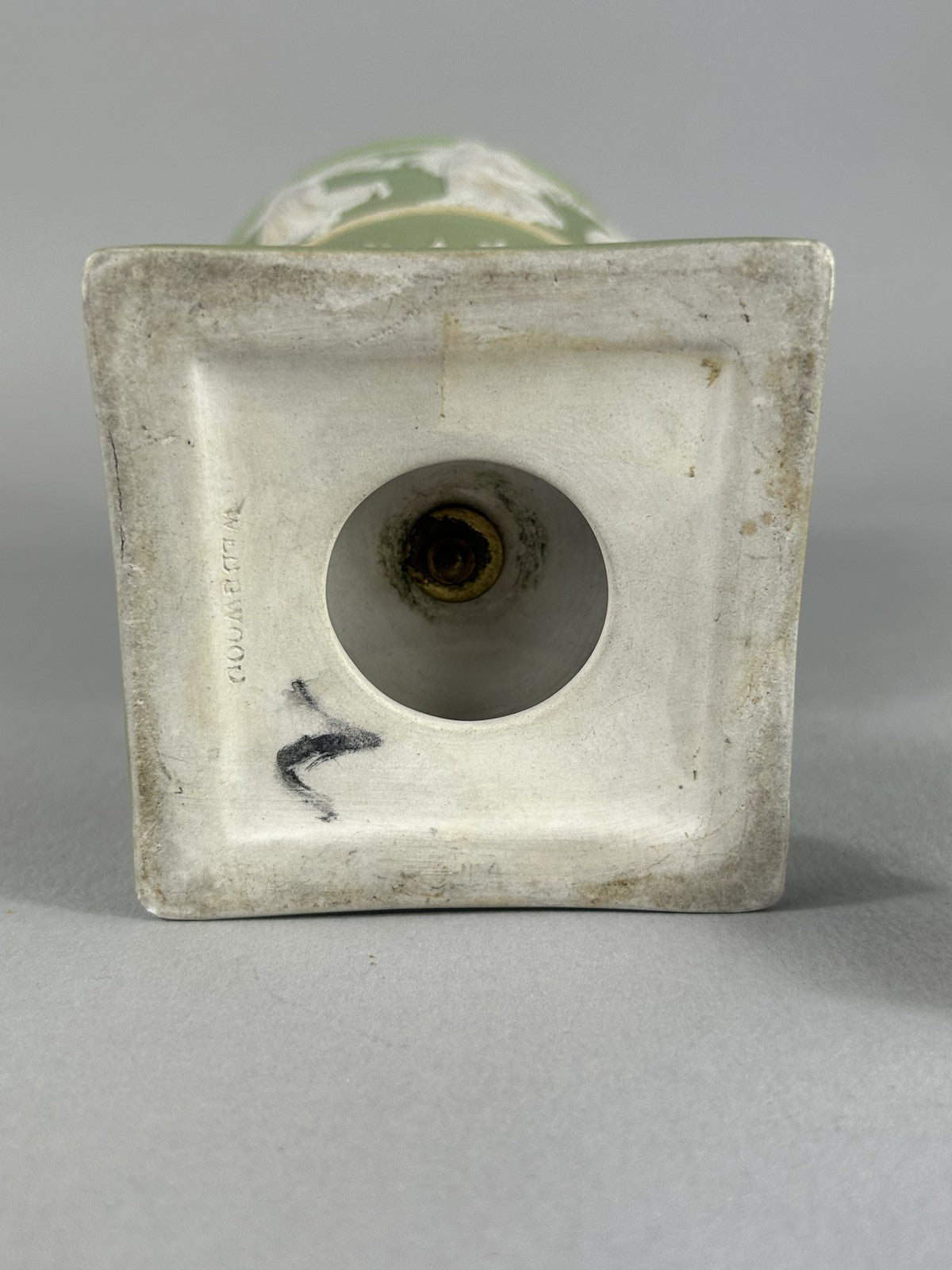
This attractive 19th‑century Wedgwood lidded urn is an excellent example of the firm’s neo‑classical jasperware, produced in the celebrated matt sage‑green and white palette. Standing approximately 24cm high, the piece has been converted at some stage for use as a lamp, as evidenced by the central drilling through the square foot, yet it retains a strong decorative presence and much of its original period charm.
The body of the urn is of ovoid, almost egg‑shaped form set on a slender waisted stem and a square plinth base. Around the main body runs a continuous procession of classical female figures in flowing draperies, modelled in applied white relief. These dancing maidens, holding hands and moving rhythmically around the vessel, are typical of Wedgwood’s late 18th‑ and 19th‑century interpretations of ancient Roman and Greek motifs and recall designs after John Flaxman. Beneath the figures, the lower section of the bowl is encircled with upright leaf and palmette motifs, also in white relief, which echo the laurel and acanthus ornament of classical architecture.
The shoulder of the urn is enriched with an elaborate band of pendant oak leaves and husk ornament, finely detailed and crisply cast, framing a pair of applied mask‑and‑handle terminals to either side. Each handle issues from a satyr or faun mask and rises in a pronounced scroll, creating a strong sculptural accent against the smooth green ground. The handles show visible repair and overpainting where breaks and restoration have been carried out, with staining and discolouration at the junctions; this is clearly shown in the images and should be taken into account when assessing condition. The crispness of the mask modelling, however, still contributes strongly to the urn’s visual impact.
The detachable domed cover continues the classical theme, being topped with a small ball finial and bordered with a gadrooned or laurel‑style band of white relief around the rim. The upper surface is decorated with radiating leaf panels in white, complementing the ornament on the shoulder. The lid has sustained a chip and shows multiple old breaks with visible glue lines and overpainting, again clearly documented in the photographs. Despite this, it fits the urn well and preserves the overall profile of the design.
The square base is particularly attractive, featuring a continuous frieze of raised anthemion or palmette motifs in white relief on all four sides. This decorative border anchors the composition and provides a visual counterweight to the more animated frieze of dancing figures above. The underside of the base is impressed “WEDGWOOD” in uppercase letters, a standard factory mark that is consistent with 19th‑century production. The central aperture and old metal fitting remain from its conversion, though the piece can still be displayed simply as a decorative urn if desired.
Condition overall is fair to good for age, with notable restoration. The handles have both been broken and reattached, with associated losses, infilling and staining to the junctions. The stem and lower section of the urn also show restoration and small chips, particularly around the moulded leaf collar at the base of the bowl. The cover has suffered more significant damage, including a sizeable chip and several glued fractures running across the top, and there is evidence of retouching to match the original green jasper body. Surface wear, minor abrasions and light soiling are visible throughout, in keeping with a 19th‑century decorative piece that has been handled and adapted over time.
Collectors of Wedgwood jasperware will recognise in this urn many hallmarks of the firm’s classic output: the calm, matt green body; the refined white reliefs depicting antique subjects; and the balanced, architectural composition moving from square plinth to ovoid body and domed cover. Although the restorations and lamp conversion affect its value compared with a pristine example, they do not detract from its historical interest. The urn remains a highly decorative object that illustrates Wedgwood’s enduring influence on Victorian taste and the continuing popularity of neo‑classical design well into the 19th century.
This piece would display well on a mantel, sideboard or within a cabinet of jasperware and other neo‑classical ceramics, where its elegant silhouette and soft green‑and‑white palette can be fully appreciated. It also offers an opportunity for a specialist conservator to undertake further sympathetic restoration should a future owner wish to refine its appearance while preserving its period character.