Moffitts Antiques
Wedgwood Basalt Jasperware Engine Turned Teapot with Figure Finial
Wedgwood Basalt Jasperware Engine Turned Teapot with Figure Finial
Couldn't load pickup availability
This attractive black basalt teapot is an excellent example of Wedgwood’s refined jasperware production of the late 18th to early 19th century. Made from the dense, fine‐grained black stoneware body developed by Josiah Wedgwood, the pot displays the smooth, satin sheen and crisp modelling that made basalt wares highly fashionable on both sides of the Channel.
The body is of straight‑sided cylindrical form, rising from a shallow foot rim to a gently rounded shoulder. The exterior has been engine turned, giving a precise, evenly spaced vertical fluting around the entire circumference. This mechanically cut decoration, introduced by Wedgwood to imitate fashionable turned metal and wooden tea equipage, creates a subtle play of light across the dark surface and emphasizes the pot’s elegant, neoclassical proportions.
The fixed spout is sharply tapered and slightly faceted near the base, typical of Wedgwood basalt teapots of the late Georgian period. Opposite, the loop handle is neatly pulled with a delicate inward flick at the upper terminal and a foliate moulded junction at the lower terminal, providing both comfort in use and a decorative flourish. The lid sits snugly within a recessed gallery and is bordered by a fine beaded rope moulding that continues around the shoulder of the pot, visually uniting lid and body.
A particularly appealing feature is the figural finial, modelled as a seated, hooded figure wrapped in drapery, probably representing a classical or allegorical subject. The figure sits on a radiating, engine‑turned sunburst pattern that spreads across the lid, drawing the eye towards the sculptural knop. The modelling of the folds and the crisp profile are characteristic of Wedgwood’s high‑quality basalt figures and provide a strong focal point to the otherwise restrained, geometric design.
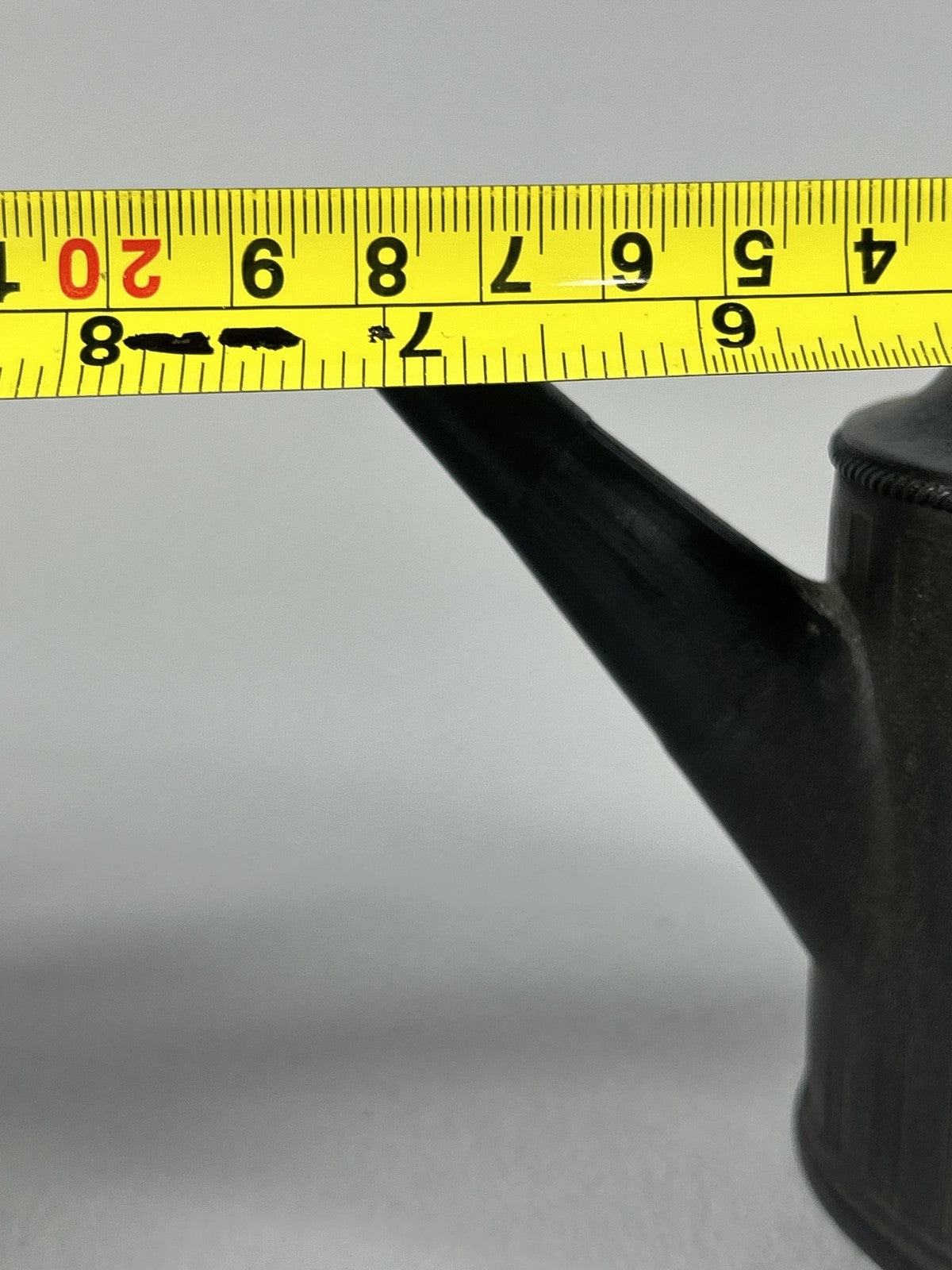
The underside is impressed WEDGWOOD together with additional potter’s or workman’s marks, confirming manufacture at the Etruria works. The piece measures approximately 12 cm in height and 18 cm in overall length from the tip of the spout to the back of the handle, a practical size for personal or small family tea service.
Condition is generally good for an item of this age, with the body, handle and spout presenting well, showing only light surface rubbing and minor age‑related wear to the high points of the turning. As noted, there has been restoration to the lid: a visible old crack runs across one side of the cover, associated with an area of infill and retouching around the base of the figural finial. The restorer has aimed to match the deep, velvety black of the original basalt, but under close inspection and in raking light the repair can be discerned, as illustrated in the photographs. There are minor scattered surface marks and tiny losses to the black finish in places, consistent with careful historic use and handling.
This engine‑turned basalt teapot, with its classical figural knop and clear Wedgwood mark, will appeal to collectors of early Wedgwood, black basalt and neoclassical ceramics. It displays beautifully in both period and modern interiors, whether as part of a wider tea equipage, alongside other basalt pieces, or as a single sculptural object. Despite the restored lid, it remains a desirable and decorative example of Wedgwood’s technical innovation and design sophistication during the height of the Georgian tea‑drinking era.