Moffitts Antiques
Wedgwood & Bentley 18th C Black Basalt Intaglio Seal – Classical Male Figure
Wedgwood & Bentley 18th C Black Basalt Intaglio Seal – Classical Male Figure
Couldn't load pickup availability
Experience the quiet luxury of early English neoclassicism with this rare 18th century Wedgwood & Bentley black basalt intaglio seal, finely modelled with the figure of a classical male. A refined object of distinction, it beautifully encapsulates the artistry and ambition of Josiah Wedgwood’s most prestigious partnership.
This exquisite seal is crafted in black basalt stoneware, the celebrated “Egyptian black” body perfected by Wedgwood in the 18th century. Revered for its dense, satin-matte surface and deep, even colour, black basalt was the chosen medium for some of Wedgwood & Bentley’s most sophisticated ornamental wares, inspired by the art and archaeology of the Grand Tour.
The intaglio is deeply and crisply engraved, depicting a male figure in classical style, recalling ancient Roman and Greek engraved gems. The modelling displays refined detail and elegant proportion, characteristic of Wedgwood & Bentley’s finest work. These seals were used not only as functional objects for wax impressions, but also as expressions of taste, learning and status in 18th century society.
This piece is closely aligned with the types recorded in the seminal 18th century catalogue:
- A Catalogue of Cameos, Intaglios, Medals, Busts, Small Statues, and Bas-reliefs; with a General Account of Vases and Other Ornaments After the Antique, Made by Wedgwood and Bentley; and Sold at Their Rooms in Greek-Street-Soho, London – 1777
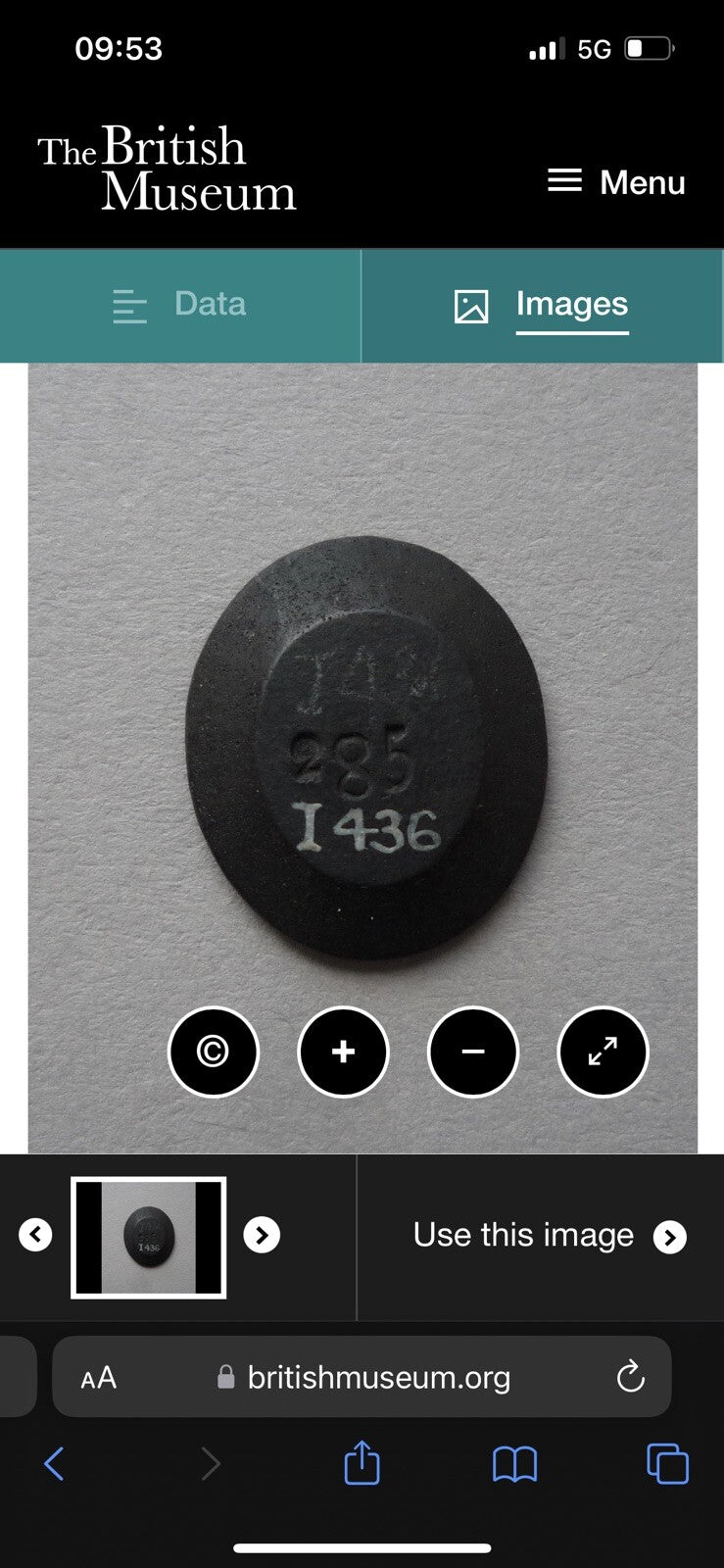
Comparable seals are also represented in major institutional collections, including an example of similar type held by the British Museum, underscoring the historical importance and collectability of these early basalt intaglios.
Key Features
- Maker: Wedgwood & Bentley
- Period: 18th century
- Material: Black basalt stoneware (fine, dense, unglazed “Egyptian black” body)
- Type: Intaglio seal
- Subject: Classical male figure
- Style: Neoclassical, after the antique
Why Collect Wedgwood & Bentley Basalt Seals?
Early basalt seals by Wedgwood & Bentley occupy a special place in the history of ceramics and decorative arts. They unite:
- Artistic significance – drawing directly on classical engraved gems and antique intaglios admired in 18th century Europe.
- Technical innovation – showcasing Wedgwood’s mastery of black basalt, a body that revolutionised refined stoneware production.
- Historical resonance – associated with the sophisticated circles who patronised Wedgwood & Bentley’s Soho showroom in London.
This seal is ideal for the discerning collector of early Wedgwood, neoclassical ceramics, seals and intaglios, Georgian decorative arts, and Grand Tour–inspired objects. It presents beautifully in a cabinet of curiosities, alongside antique cameos, classical bronzes, or fine 18th century porcelain and pottery.
Condition
Offered as a genuine antique with the character and patina appropriate to its age. Please refer to the photographs for a detailed visual assessment of condition. Further images or information can be provided on request.
Display & Use
While originally intended for impressing wax on letters and documents, this piece is now best appreciated as a collector’s and display object. The sculptural quality of the intaglio and the rich, velvety black of the basalt make it particularly striking when:
- Displayed in a glazed cabinet under directional light
- Grouped with other black basalt or jasperware pieces
- Presented in a small frame or mount as a miniature work of art
A Refined Addition to Any Collection
This 18th century Wedgwood & Bentley black basalt intaglio seal with a classical male figure is more than a decorative object; it is a tangible link to the intellectual and artistic culture of Georgian England. With its museum-level references, historical importance, and timeless aesthetic, it would be a distinguished addition to any serious collection of fine ceramics, Wedgwood, seals, or neoclassical art.